As HR departments take on more responsibility, from recruitment to compliance to workforce planning, off-the-shelf tools often fall short. HRM Software Development allows businesses to build human resource systems that actually match how their teams work, instead of forcing HR processes into a rigid, one-size-fits-all platform. This guide covers what custom HRM development involves, how it connects with the rest of your tech stack, and what to look for when planning a project.
What Is HRM Software Development?
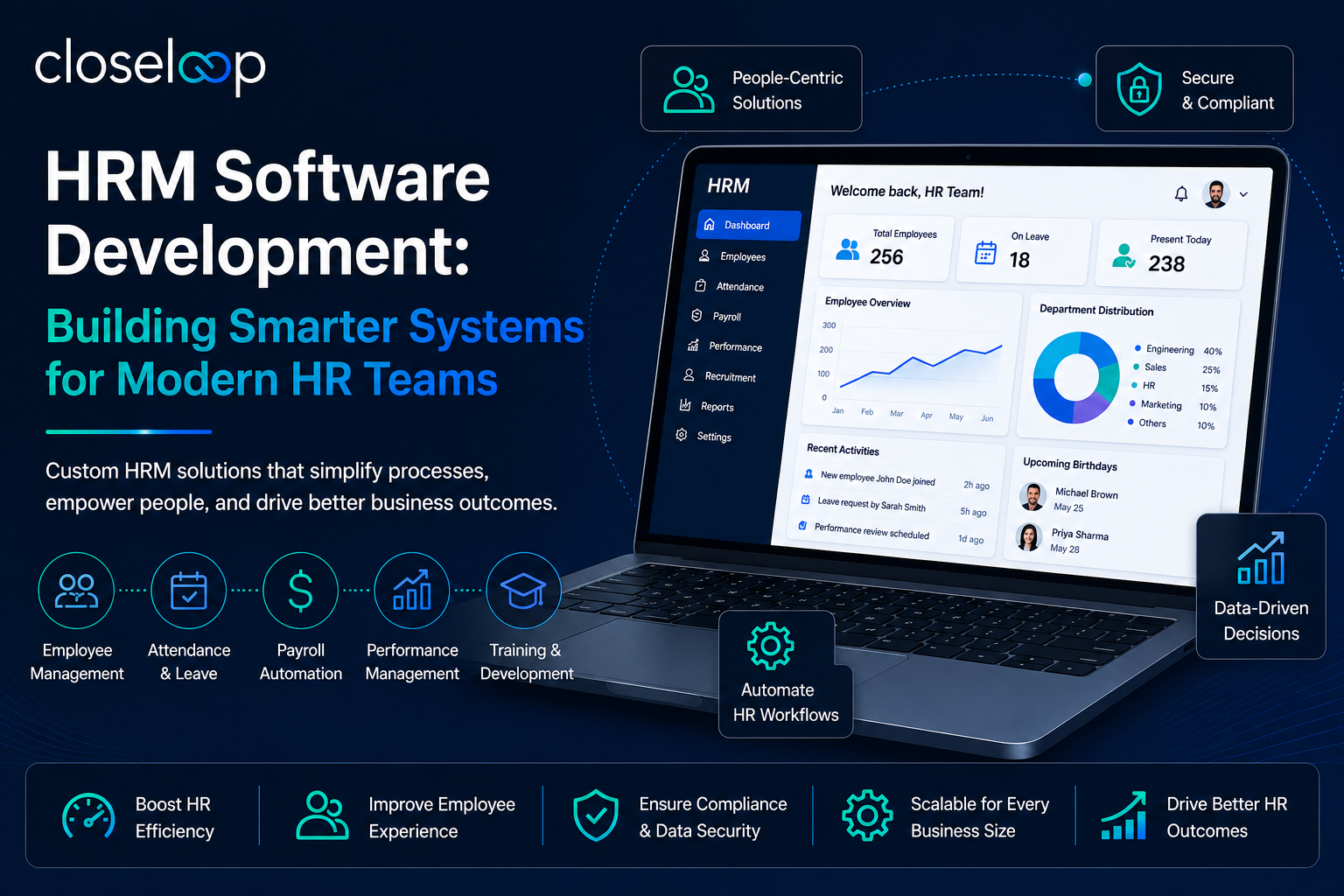
HRM software development is the process of designing, building, and deploying systems that manage core human resource functions such as recruitment, onboarding, payroll, performance tracking, and employee records.
Unlike generic HR platforms, custom-built systems are shaped around a company's actual workflows, approval chains, and reporting needs. This matters most for businesses with unique compliance requirements, multi-location teams, or hybrid workforce structures that standard tools don't fully support.
Why Businesses Are Moving Away from Generic HR Tools
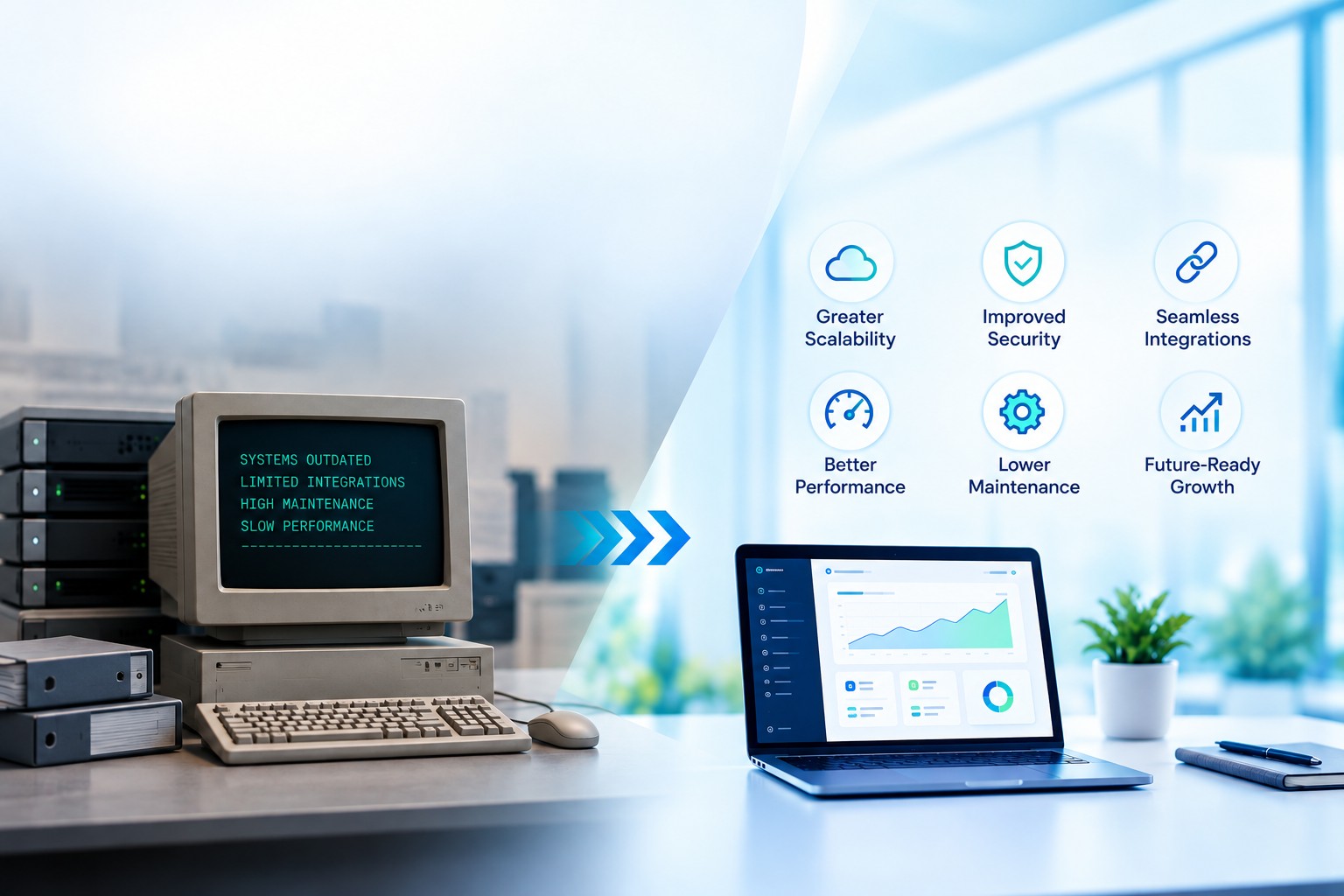
Off-the-shelf HR software works fine for basic needs, but it tends to break down as a company grows. Common frustrations include rigid workflows, limited customization, and poor compatibility with other business systems.
Many HR leaders also run into reporting limitations. Generic tools often provide standard dashboards that don't reflect the specific metrics leadership actually cares about, forcing teams back into spreadsheets for anything beyond the basics.
A custom-built system removes these constraints. It's designed around existing processes rather than requiring the business to adapt to the software's limitations.
There's also a scaling problem that shows up as companies grow. A tool that worked fine for 30 employees often becomes a bottleneck at 150, especially once multiple departments, locations, or approval layers get added. At that point, teams frequently end up managing HR processes across a patchwork of spreadsheets, email threads, and disconnected apps, which creates its own compliance and accuracy risks.
HRM Software Integrations: Connecting HR with the Rest of the Business
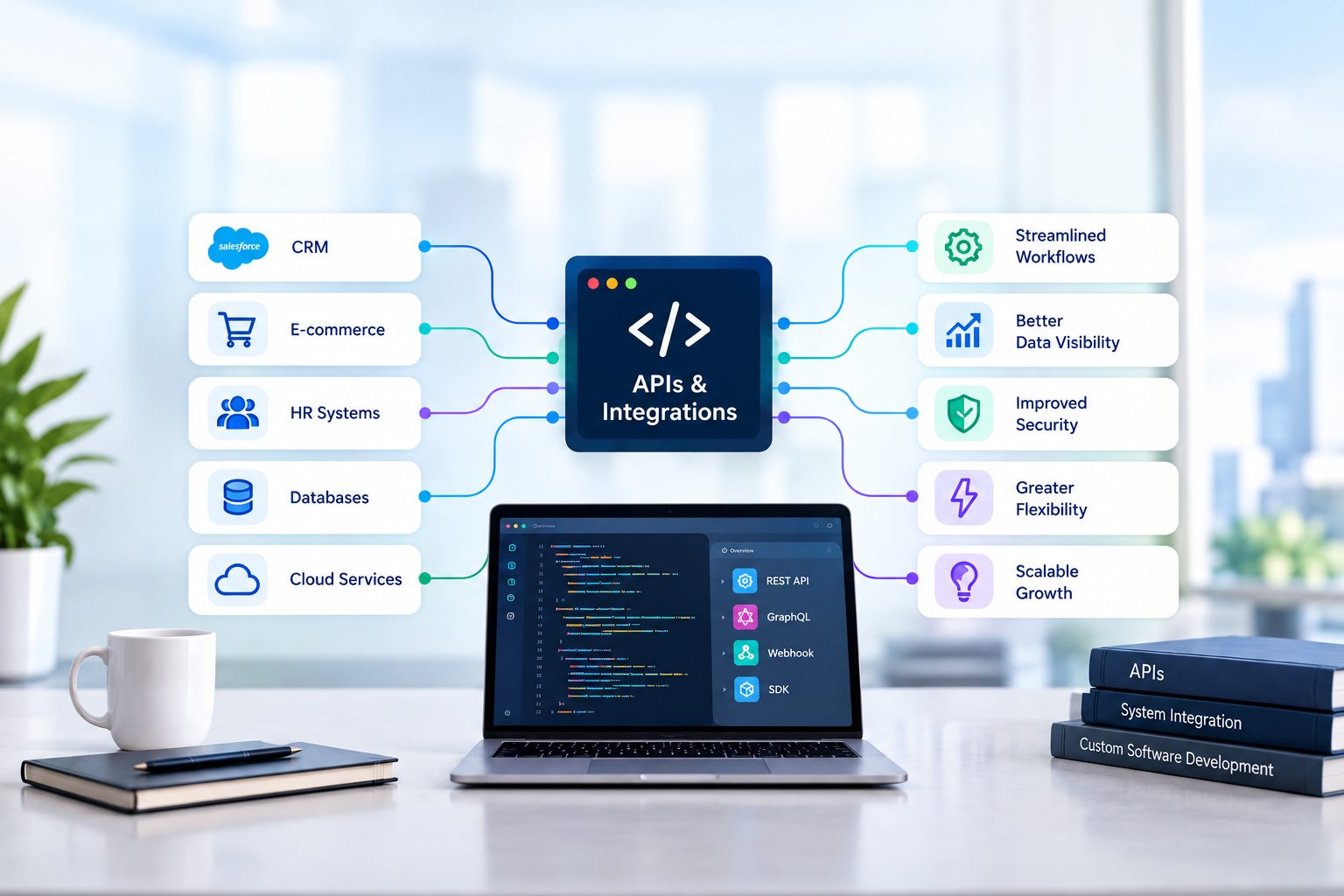
HR doesn't operate in isolation. Payroll data feeds finance, recruitment data feeds sales and operations planning, and employee records often need to sync with communication and CRM tools. This is where HRM Software Integrations become essential.
Poorly connected systems lead to duplicate data entry, mismatched records, and delayed reporting. A properly integrated HR system keeps information consistent across every department that touches it.
Common Systems HR Teams Integrate With
Businesses typically connect their HRM platform with:
- CRM systems for recruitment pipeline and candidate tracking
- ERP systems for payroll, budgeting, and headcount planning
- Business process automation tools for approvals and onboarding workflows
- Communication and collaboration platforms for internal updates
Recruitment teams that rely on CRM-style pipelines for candidate tracking often benefit from reviewing dedicated CRM services to understand how candidate data should flow between systems. For companies with highly specific hiring workflows, a custom CRM development approach can integrate more precisely with an HRM platform than a generic tool.
Teams already using platforms like HubSpot or Salesforce for recruitment marketing or talent pipelines frequently need these tools synced with HR systems. Specialized HubSpot implementation and Salesforce implementation support can simplify this connection.
On the finance side, payroll and headcount data often needs to sync with broader business systems. Reviewing ERP services is a useful step for companies planning to connect HR and finance operations more closely.
For businesses building out approval chains, onboarding workflows, or leave management automation, this often overlaps directly with business process automation work. A deeper look at how automation fits into HR operations is available in this guide on business process automation services.
Integration platform tools also play a growing role in HR tech stacks, particularly for companies managing several disconnected systems. This overview of Boomi integration services walks through how iPaaS tools handle multi-system data flow, which is directly relevant for complex HRM environments.
Custom Software Development for HR: When Off-the-Shelf Isn't Enough
Some HR workflows are specific enough that no pre-built tool fits cleanly. This is where a broader custom software development approach comes in, building modules or entire platforms around the business's exact processes.
Common custom development needs in HR include tailored approval workflows, industry-specific compliance tracking, and reporting dashboards built around metrics that matter to leadership rather than generic KPIs.
Signs You May Need Custom HR Software
- Standard HR platforms require constant manual workarounds
- Compliance requirements are specific to your industry or region
- Reporting needs go beyond what built-in dashboards offer
- Multiple disconnected tools are being used to patch gaps
Businesses evaluating vendors for this kind of work often review broader case studies first. This guide on customized software development services offers useful context on how custom builds are typically scoped and delivered.
Also Read: HR Software Development Challenges and Cost Explained
The Role of a Software Developer Staffing Agency in HR Tech Projects
Building or maintaining HRM software isn't always something internal teams can handle alone, especially during growth phases or complex integration projects. This is where working with a Software Developer Staffing Agency becomes valuable.
A staffing partner provides access to developers with specific experience in HR systems, integrations, and compliance-heavy environments, without the long timeline of a full internal hire.
When Businesses Typically Use Developer Staffing for HR Projects
- Scaling a development team quickly for a major HRM rollout
- Needing specialized integration experience for a short-term project
- Filling skill gaps for ongoing system maintenance and updates
- Managing seasonal or project-based development workload
This approach is particularly common among companies going through rapid growth, where hiring a full internal engineering team isn't practical for a time-limited HR system overhaul. Fast-scaling e-commerce and digital-first businesses in particular often hit this wall, needing HR systems that can keep pace with hiring while their core digital commerce operations are also expanding.
Staffing support isn't limited to one-off projects either. Some businesses bring in developer staffing on an ongoing basis to handle ongoing HRM enhancements, seasonal workforce changes, or ongoing integration maintenance, effectively treating it as an extension of their internal team rather than a short-term fix.
Key Features to Look for in Modern HRM Software
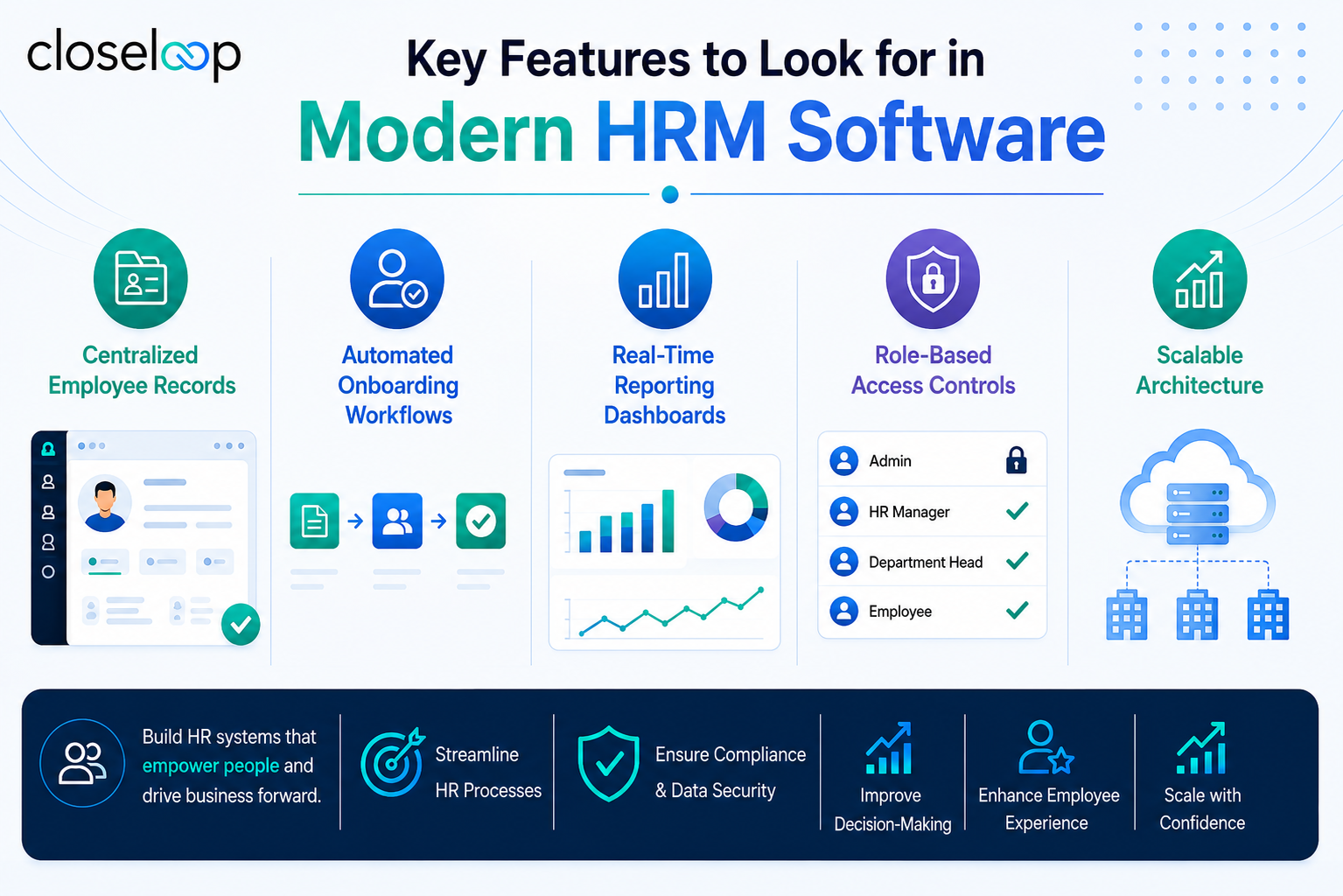
Whether built custom or configured from an existing platform, effective HRM systems typically include:
Centralized employee records that keep documentation, history, and compliance data in one accessible location.
Automated onboarding workflows that reduce manual paperwork and speed up new hire readiness.
Real-time reporting dashboards that give leadership accurate workforce data without manual compilation.
Role-based access controls that keep sensitive employee data secure while still enabling department-level visibility.
Scalable architecture that supports growth into new locations, departments, or business units without a full system rebuild.
Also Read: How Closeloop Built Ajna - A SaaS Staffing Agency Software Platform for Streamlined Workforce Management
Benefits of Investing in Custom HRM Software Development
Companies that move to purpose-built HR systems typically see measurable improvements across departments.
Reduced administrative overhead as manual processes get replaced with automated workflows.
Improved data accuracy since information isn't being re-entered across multiple disconnected tools.
Faster decision-making thanks to real-time visibility into workforce metrics.
Better compliance tracking, particularly valuable for industries with strict regulatory requirements.
Stronger scalability as the system grows alongside the business instead of requiring a replacement down the line.
HRM Software Development Process: Step by Step
A well-run project generally follows a consistent structure:
1. Discovery and Requirement Gathering
The development team reviews current HR workflows, pain points, and compliance needs to define project scope.
2. System Design and Architecture Planning
Core modules are mapped out, covering everything from onboarding to payroll to reporting structure.
3. Development and Integration
The system is built and connected to existing tools like CRM, ERP, or automation platforms as needed.
4. Testing and Quality Assurance
Workflows are tested against real-world scenarios before rollout to catch issues early.
5. Deployment and Training
Teams are trained on the new system, and support resources are provided for a smoother transition.
6. Ongoing Support and Iteration
Post-launch support addresses issues quickly and refines workflows based on actual usage patterns.
Common Mistakes to Avoid in HRM Software Projects
Even well-planned projects run into avoidable issues, including:
- Underestimating the complexity of integrating with existing systems
- Skipping employee training, which slows adoption significantly
- Choosing a development partner without relevant HR tech experience
- Failing to plan for compliance requirements early in the design phase
- Treating launch as the finish line instead of an ongoing process
Planning realistically around these risks, and working with a team that has handled similar HR system builds, helps avoid costly delays.
It also helps to build in a buffer for change management. Even a well-designed system will meet some resistance if employees aren't given a clear reason for the switch and adequate time to adjust. Communicating the "why" behind a new system, not just the "how," tends to shorten the adoption curve significantly.
Choosing the Right Development Partner
Not every software partner has the same depth of HR-specific experience. Look for a provider offering:
- A track record of building or integrating HR systems across industries
- In-house expertise in both custom development and system integrations
- Experience connecting HRM platforms with CRM, ERP, and automation tools
- Flexible staffing support for scaling development resources when needed
- Post-launch support rather than just delivery and handoff
Also Read: Is Your Recruiting Software Ready for the Future of Work?
Conclusion
Building the right HR technology isn't just about picking software, it's about designing a system that fits how your business actually operates, then connecting it cleanly to the rest of your tech stack. Businesses that plan integrations, compliance needs, and scalability from the start avoid the rework that slows down so many HR tech projects.
If your business is exploring HRM Software Development, working with a team that understands both the technical build and the staffing side of HR technology makes the process considerably smoother. Closeloop has worked with growing businesses to design, integrate, and staff HR systems that hold up as the organization scales, not just at launch.
Author

Swetha GP

VP of Delivery
She is a VP of Delivery at Closeloop. A communicator, business analyst, and engineering aficionado. Besides handling client relations, and engineering duties, she loves to pour her thoughts on paper. She writes about engineering, technologies, frameworks, and everything related to the software domain. She reads, spends time with family, and enjoys a good walk in nature in her free time. Her dream destination is Greece.
Frequently Asked Questions
Ready to transform your business with custom software solutions? Connect with our experts to discuss your requirements and explore the best approach for your organization. For any queries, reach out to sales@closeloop.com
Stay abreast of what's trending in the world of technology
When Standard NetSuite Workflows Fall Short: Implementation, Integration, and Customization...
NetSuite is one of the most capable cloud ERP platforms available, but no out-of-the-box...

From Business Bottlenecks to Digital Products: How to Evaluate Software Development Partners in the...
Every growing business eventually hits a wall. Spreadsheets multiply, teams re-enter the same...

The Hidden Cost of Disconnected Logistics Systems: A Software Architecture Approach to End-to-End...
A shipment leaves the warehouse on time, yet the customer calls twice asking where it is....
The Role of APIs and Integrations in Modern Custom Software Development
No application works alone anymore. Your CRM talks to your billing tool, your mobile app...