A shipment leaves the warehouse. Then the waiting begins. Where is it now? Has it reached the carrier? Is the delivery still on schedule? Did the inventory count update correctly?
For many businesses, answering these questions still means checking several systems or digging through spreadsheets. That becomes a serious problem when supply chains involve multiple warehouses and customer orders.
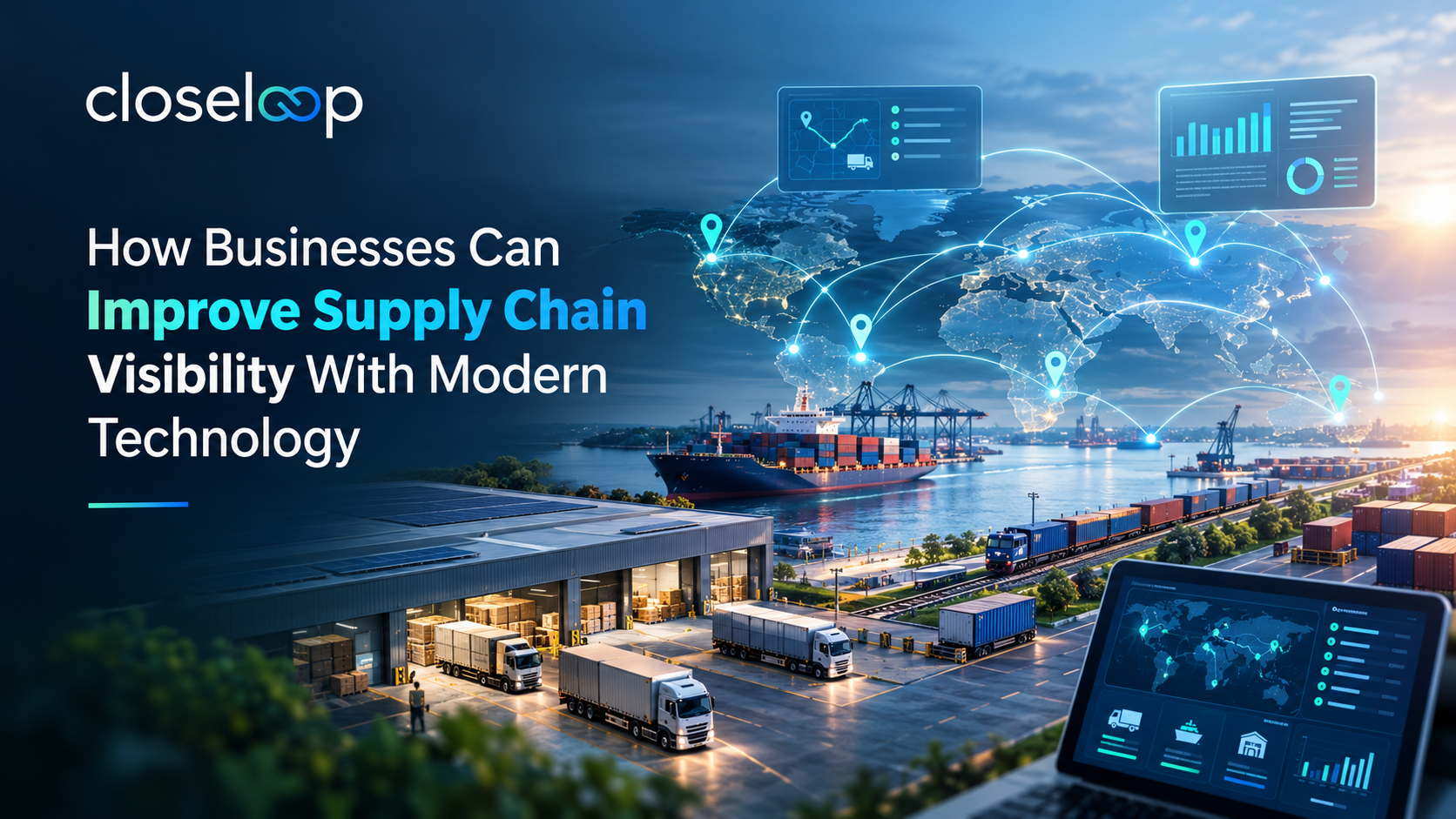
Modern technology can change that. With connected systems and automation, businesses can create a much clearer view of what is happening across the supply chain. The goal is not simply to collect more data. It is to make the right information available when people actually need it.
What Supply Chain Visibility Really Means
Supply chain visibility is the ability to track and understand the movement of products and information across different stages of the supply chain. Good visibility connects the dots between procurement and customer service. Instead of seeing isolated events, teams can understand how one event affects the next.
For example, a delayed supplier shipment should not come as a surprise to the warehouse team. Ideally, the system should show the delay early and allow planners to adjust inventory or delivery schedules before customers feel the impact.
That is where technology becomes useful. Modern Logistics And Transportation Software Development can bring these disconnected operational activities into a more connected digital environment.
Start by Connecting Disconnected Systems
One of the most practical ways to improve visibility is to connect the systems already being used.
Businesses do not always need to replace every platform. Trying to rebuild the entire technology environment at once can create unnecessary cost and disruption.
APIs and integration platforms can allow information to move between ERP systems and warehouse platforms. Transportation systems and other business applications.
For instance, when an order is processed in an ERP. That information can automatically reach the warehouse. Once the order is dispatched, tracking information can flow back into the central system. Customer service can then see the latest status without asking the transportation team for an update.
Closeloop supports this type of connected architecture through its Logistics And Transportation Software Development capabilities, including supply chain integration, custom APIs, data synchronization, analytics, and mobile applications.
Use Real-Time Tracking Where It Matters
Visibility becomes much more useful when information is updated close to the moment an event occurs.
GPS tracking can provide vehicle locations. RFID and barcode systems can help track inventory movement. Telematics can provide vehicle and operational data. IoT sensors can monitor certain shipment conditions where required.
But real-time data should not mean showing every possible data point on a screen.
The better approach is to identify which information actually affects decisions.
A transportation manager may need vehicle location, estimated arrival time, route status, and delivery exceptions. A warehouse manager may care more about inventory movement, picking progress, receiving delays, and order status.
For companies evaluating Logistics And Transportation Software Development, this distinction is important. The most useful system is one that turns operational data into information employees can actually act on.
Build a Single Operational View
Once data is connected, businesses can bring important information into centralized dashboards.
A useful supply chain dashboard might show:
- Orders currently in transit
- Inventory levels by location
- Delayed shipments
- Vehicle and route status
- Supplier performance
- Delivery exceptions
- Order fulfillment times
- Key operational KPIs
This creates a shared operational picture.
Imagine a shipment that is running six hours late. Imagine a shipment that is running six hours late. Without centralized visibility, the issue might only become obvious when a customer calls. With a connected dashboard, the delay can trigger an alert while there is still time to respond.
That difference can have a real impact on customer experience.
Also Read: Upright: Building Custom Inventory Management Software for Multi-Warehouse Operations
Automate Routine Updates and Exceptions
Visibility improves when people do not have to manually maintain it.
Automation can update shipment statuses, send notifications, generate reports, trigger low-stock alerts, and route exceptions to the right person. This reduces the amount of repetitive work that often causes information to become outdated.
For example, if a delivery misses its expected milestone, the system could automatically flag the shipment. A dispatcher receives an alert. Customer service sees the same status. The relevant manager can review the issue without waiting for someone to create a manual report.
Closeloop’s business process automation services include workflow automation, reporting, analytics automation, and supply chain management automation. These capabilities can help businesses reduce manual handoffs while keeping operational information moving between teams.
Use Analytics to Turn Visibility Into Action
Seeing what is happening is only the first step.
The next question is, "What does all this information tell us?"
Analytics can reveal recurring patterns that are difficult to spot through individual transactions. Businesses can compare carrier performance and find operational bottlenecks.
This information can support better planning over time.
Predictive analytics can go further by helping businesses estimate demand and improve inventory decisions. AI can also assist with route optimization and exception detection when the underlying data is reliable.
Closeloop's research on AI in supply chains highlights how connected data can support forecasting, inventory management, routing, and other operational decisions.
For businesses exploring this area, The Role of AI in Logistics Software Development provides a useful look at practical AI applications across logistics operations.
Modernize Gradually Instead of Rebuilding Everything
Improving visibility does not have to become a massive technology project.
A practical roadmap can begin with one visibility problem. Maybe shipment tracking is unreliable. Maybe inventory data is delayed. Maybe supplier updates are trapped in email.
Fix that issue first.
Then connect the next process.
This phased approach allows businesses to measure results before investing further. It also reduces disruption for employees who still need to keep daily operations running.
Where existing platforms cannot support new requirements, custom software development services can provide a way to build applications or integration layers around specific operational needs. The focus should remain on solving a business problem rather than adding technology simply because it is available.
Businesses exploring Logistics And Transportation Software Development should also consider scalability at this stage. A solution that works for one warehouse may need a different architecture once more locations and data sources are added.
Create Visibility That Supports Faster Decisions
The strongest supply chain visibility strategy is not about watching every shipment every time. It is about making important information available to the right people at the right time.
That means connecting systems instead of creating more silos. It means capturing field data accurately. It means using automation to reduce manual updates and analytics to understand operational patterns.
Businesses should also think beyond today's requirements. Supply chains change quickly. New warehouses open. Carrier networks expand. Customer expectations shift. Data volumes grow.
A technology environment that can adapt will be far more useful than one built around a fixed process.
Conclusion
Supply chain visibility has become an important part of modern operations. When businesses can see inventory and exceptions through connected technology. They can respond faster and plan with greater confidence.
The real opportunity is not simply installing another tracking tool. It is creating a connected operational environment where data moves smoothly between systems and teams.
For organizations ready to improve that connection, Logistics And Transportation Software Development can provide the foundation for building more responsive, data-driven supply chain operations. That shift is where modern technology can make supply chains more responsive, efficient, and prepared for whatever comes around the corner.
Author

Swetha GP

VP of Delivery
She is a VP of Delivery at Closeloop. A communicator, business analyst, and engineering aficionado. Besides handling client relations, and engineering duties, she loves to pour her thoughts on paper. She writes about engineering, technologies, frameworks, and everything related to the software domain. She reads, spends time with family, and enjoys a good walk in nature in her free time. Her dream destination is Greece.
Stay abreast of what's trending in the world of technology
NetSuite Integration Challenges and How Businesses Can Overcome Them
Most NetSuite projects do not struggle because of NetSuite itself. They struggle at the...
How AI and Automation Are Transforming Modern Logistics Operations
A shipment that leaves the warehouse on time can still arrive late. A truck can run full on...
The Hidden Risks of AI-Generated Code in Enterprise Applications
AI coding assistants have moved from experiment to everyday tool in many engineering teams....
When Standard NetSuite Workflows Fall Short: Implementation, Integration, and Customization...
NetSuite is one of the most capable cloud ERP platforms available, but no out-of-the-box...