When a growing business asks whether to buy ready-made software or build something custom, the honest answer is: it depends on your workflows, budget, timeline, and long-term goals. Custom software vs off-the-shelf software is one of the most common decisions companies face as they scale, and getting it wrong can mean wasted budget, workflow bottlenecks, or a tool that simply can't keep up with growth. This guide breaks down both options in plain terms so you can make a confident, informed decision.
What Is Custom Software?
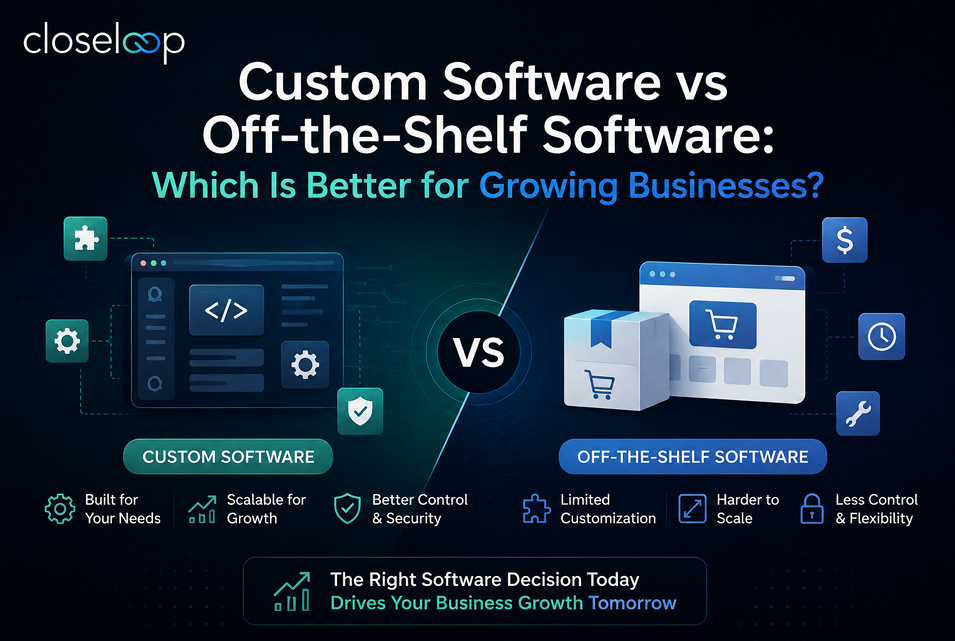
Custom software is an application built specifically for one organization's processes, goals, and users. Instead of adapting your business to fit a product, the software is designed around how your business actually operates.
Common examples include:
- A logistics company building its own route-optimization system
- A healthcare provider developing a patient-management platform tailored to its compliance needs
- A retailer creating an internal inventory tool that connects directly to its supply chain
Because it's purpose-built, custom software is often developed through custom software development services, where a development team works closely with a business to design, build, test, and maintain the application over time.
Also Read: Upright: Building Custom Inventory Management Software for Multi-Warehouse Operations
What Is Off-the-Shelf Software?
Off-the-shelf software (also called commercial or packaged software) is a ready-made product designed to serve many businesses with similar, general needs. Think of tools like standard CRMs, accounting platforms, or project management apps.
Key characteristics:
- Built for a broad market, not one specific company
- Typically priced through subscriptions or licenses
- Comes with pre-set features, workflows, and limitations
- Usually faster to deploy than custom-built systems
Off-the-shelf software works well when a business's needs align closely with what the product already offers. This category is sometimes referred to in procurement and IT circles as commercial off-the-shelf (COTS) software, a term widely used across both private industry and government technology purchasing.
Custom Software vs Off-the-Shelf Software: Key Differences
Customization and Flexibility
Custom software offers deep software customization every feature, workflow, and interface element can be shaped around your operations. Off-the-shelf tools offer configuration (settings, add-ons, integrations) but rarely full flexibility, since changes are limited by what the vendor allows.
Scalability
Software scalability is often where the two options diverge most. Off-the-shelf tools may hit limits as your user base, data volume, or feature needs grow, sometimes forcing you to migrate to a different platform later. Custom software can be architected from day one to scale alongside the business, though this requires upfront planning.
Integration With Existing Systems
Growing businesses often run multiple tools ERP, CRM, inventory, HR, finance. Custom software can be built with integration in mind, connecting directly to your existing tech stack via APIs. Off-the-shelf products may offer integrations, but only with platforms the vendor has already chosen to support.
Security and Control
With custom software, a business has more control over its security architecture, data storage, and compliance requirements, which matters for industries like healthcare, finance, or legal services. Off-the-shelf software relies on the vendor's security practices, which are often solid but not tailored to your specific risk profile.
Maintenance and Support
Off-the-shelf software maintenance is handled by the vendor, including updates, bug fixes, and patches convenient, but you're dependent on their release schedule. Custom software maintenance is the business's responsibility (or their development partner's), offering more control but requiring an ongoing budget and technical relationship.
Long-Term Business Value
Custom software tends to deliver stronger long-term business growth alignment because it evolves with the company. Off-the-shelf software offers faster short-term value but may require replacement or heavy customization as needs mature.
Comparison at a Glance
| Factor | Custom Software | Off-the-Shelf Software |
|---|---|---|
| Initial cost | Higher upfront investment | Lower upfront cost |
| Time to deploy | Longer development timeline | Fast, often immediate |
| Customization | Fully tailored | Limited to vendor options |
| Scalability | Built to scale with the business | May require migration later |
| Integration | Deep, purpose-built integration | Depends on vendor-supported integrations |
| Ownership | Business owns the software | Business licenses/rents access |
| Maintenance | Managed by business/dev partner | Managed by vendor |
| Best for | Unique workflows, long-term plans | Standard, common business needs |
Benefits of Custom Software for Growing Businesses
- Tailored workflows software mirrors how your team actually works, not the other way around
- Competitive differentiation unique processes stay unique, rather than being standardized like competitors using the same off-the-shelf tool
- Better business automation repetitive, company-specific tasks can be automated in ways generic tools can't replicate, often through dedicated business process automation
- Ownership and control no dependency on a third-party vendor's roadmap or pricing changes
- Future-readiness easier to add emerging capabilities, including AI integration services, as the business grows
Businesses exploring this path often start by researching the best custom software development companies in the USA to understand what separates a strong development partner from a mediocre one before committing to a project.
Also Read: What Is Custom Software Development and Why Businesses Need It in 2026
Benefits of Off-the-Shelf Software
- Lower upfront cost subscription-based pricing spreads expenses over time
- Faster deployment teams can start using the tool almost immediately
- Proven reliability widely used products have been tested across many businesses
- Built-in support and updates vendors handle maintenance, security patches, and new features
- Lower technical burden no need for an in-house or dedicated development team
When Should a Growing Business Choose Custom Software?
Custom software tends to make sense when:
- Your workflows are genuinely unique and don't fit standard templates
- You've outgrown what generic tools can support (data volume, users, complexity)
- Integration with multiple internal systems is critical
- Security, compliance, or data ownership requirements are strict
- You're planning a broader digital transformation services initiative and need software that supports long-term strategy, not just a quick fix
Example: A growing e-commerce brand managing inventory across five warehouses may find that generic inventory software can't handle its specific multi-location logic, custom pricing rules, and supplier integrations. A custom-built system solves this precisely, without forcing the business to change how it operates. If that same brand also wants warehouse staff to manage stock from their phones, a mobile app development guide is a useful starting point for understanding what a tailored mobile companion app would involve.
When Is Off-the-Shelf Software the Better Choice?
Off-the-shelf software is often the smarter choice when:
- Your needs are standard (accounting, basic CRM, email marketing, HR management)
- You need something running quickly with minimal setup
- Budget constraints make custom development impractical right now
- The business is still validating processes and doesn't yet know its long-term requirements
Example: A small marketing agency that just needs project tracking and time billing will likely get more value from an established off-the-shelf tool than from investing in a custom build for functions that hundreds of existing products already handle well.
How to Choose Between Custom and Off-the-Shelf Software
Ask these questions before deciding:
- Does an existing product already solve 80–90% of our problem? If yes, off-the-shelf is usually more cost-effective.
- Will our workflow needs change significantly as we grow? If yes, custom software offers more room to adapt.
- How critical is integration with our current systems? Deep integration needs often favor custom builds.
- What's our realistic budget and timeline? Off-the-shelf is faster and cheaper initially; custom software is a longer-term investment with a different ROI curve.
- Do we need mobile access for customers or field staff? If so, custom mobile app development may be worth exploring alongside your core software strategy.
- What does our 3–5 year plan look like? Software decisions should support where the business is going, not just where it is today.
There's also a middle path: many growing businesses start with off-the-shelf tools and later transition to custom software once their processes are established and their scale justifies the investment. Others take a hybrid approach keeping off-the-shelf software for standard functions while custom-building the systems that give them a competitive edge. Businesses evaluating providers often research options like the top-rated custom software development companies in the USA before committing to a development partner.
Conclusion
There's no universal answer to "custom software vs off-the-shelf software" the right choice depends on your business's complexity, growth trajectory, and budget. Off-the-shelf software is a strong fit for standard needs, tight timelines, and lower initial investment. Custom software becomes the better choice when your workflows are unique, your systems need deep integration, or you're building toward long-term scalability that generic tools can't support.
For businesses weighing this decision, it often helps to talk with a development partner who can assess your actual workflows rather than guess at what will fit. Companies like Closeloop work with growing businesses to evaluate whether a custom build, an off-the-shelf tool, or a hybrid approach makes the most sense for their stage of growth. Whichever path you choose, the goal is the same: software that supports how your business actually works, today and as it scales.
Author

Swetha GP

VP of Delivery
She is a VP of Delivery at Closeloop. A communicator, business analyst, and engineering aficionado. Besides handling client relations, and engineering duties, she loves to pour her thoughts on paper. She writes about engineering, technologies, frameworks, and everything related to the software domain. She reads, spends time with family, and enjoys a good walk in nature in her free time. Her dream destination is Greece.
Frequently Asked Questions
Still weighing custom software against an off-the-shelf tool? Connect with our experts to assess your actual workflows and find the right fit. For any queries, reach out to sales@closeloop.com
Stay abreast of what's trending in the world of technology
Custom Software Development for Startups vs. Enterprises: Key Differences
Building software for a startup is very different from building it for a large enterprise....

NetSuite Implementation for Startups vs. Enterprises: Key Differences
Choosing an ERP system is a big step for any business. For a startup, it may be the next move...
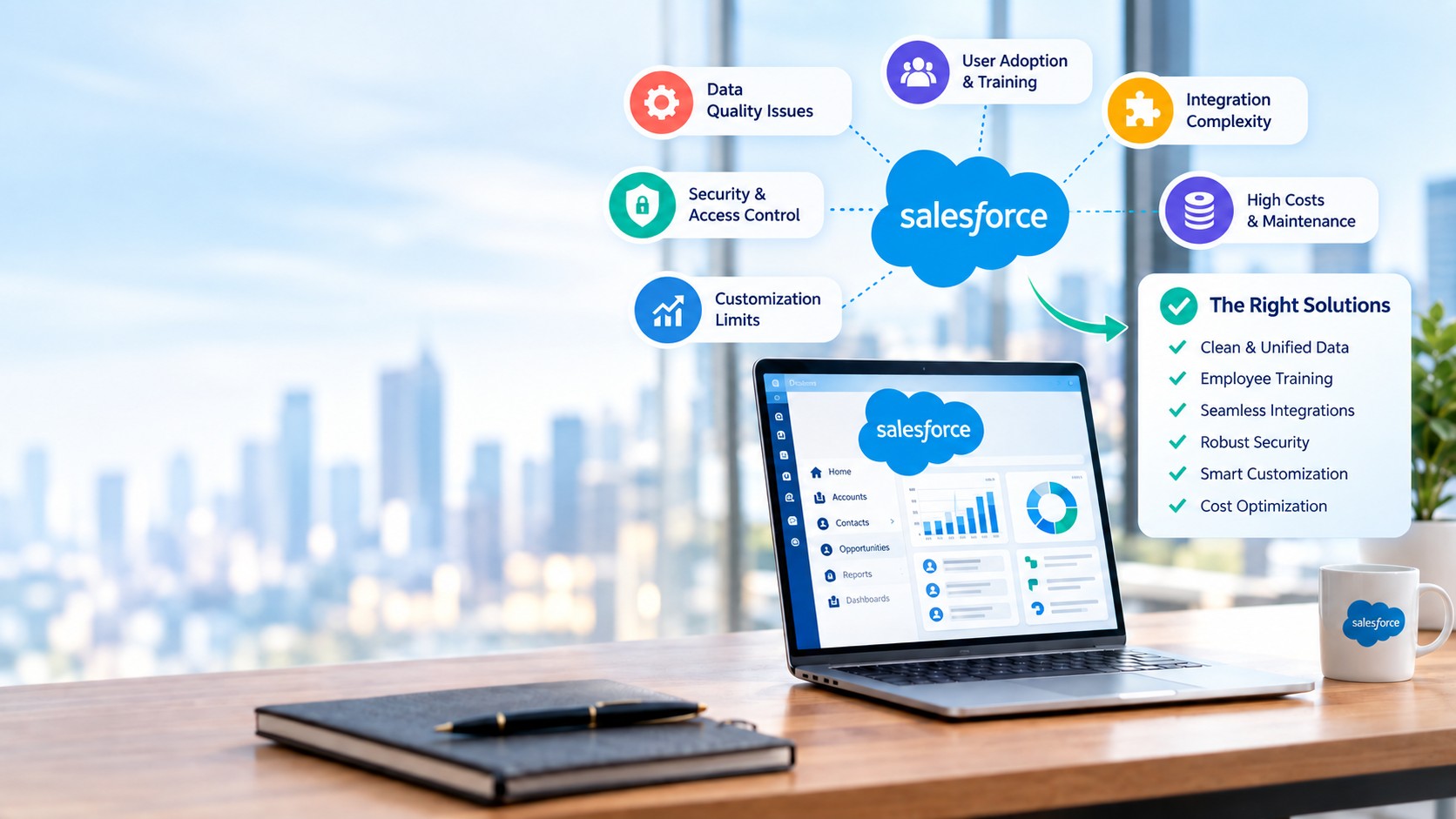
Common Salesforce CRM Challenges Businesses Face and How to Solve Them
Salesforce can bring sales, service, marketing, and customer data into one place. Yet simply...
How Custom Software Helps Businesses Scale More Efficiently
Growth sounds exciting until the systems behind the business start struggling to keep up. A...