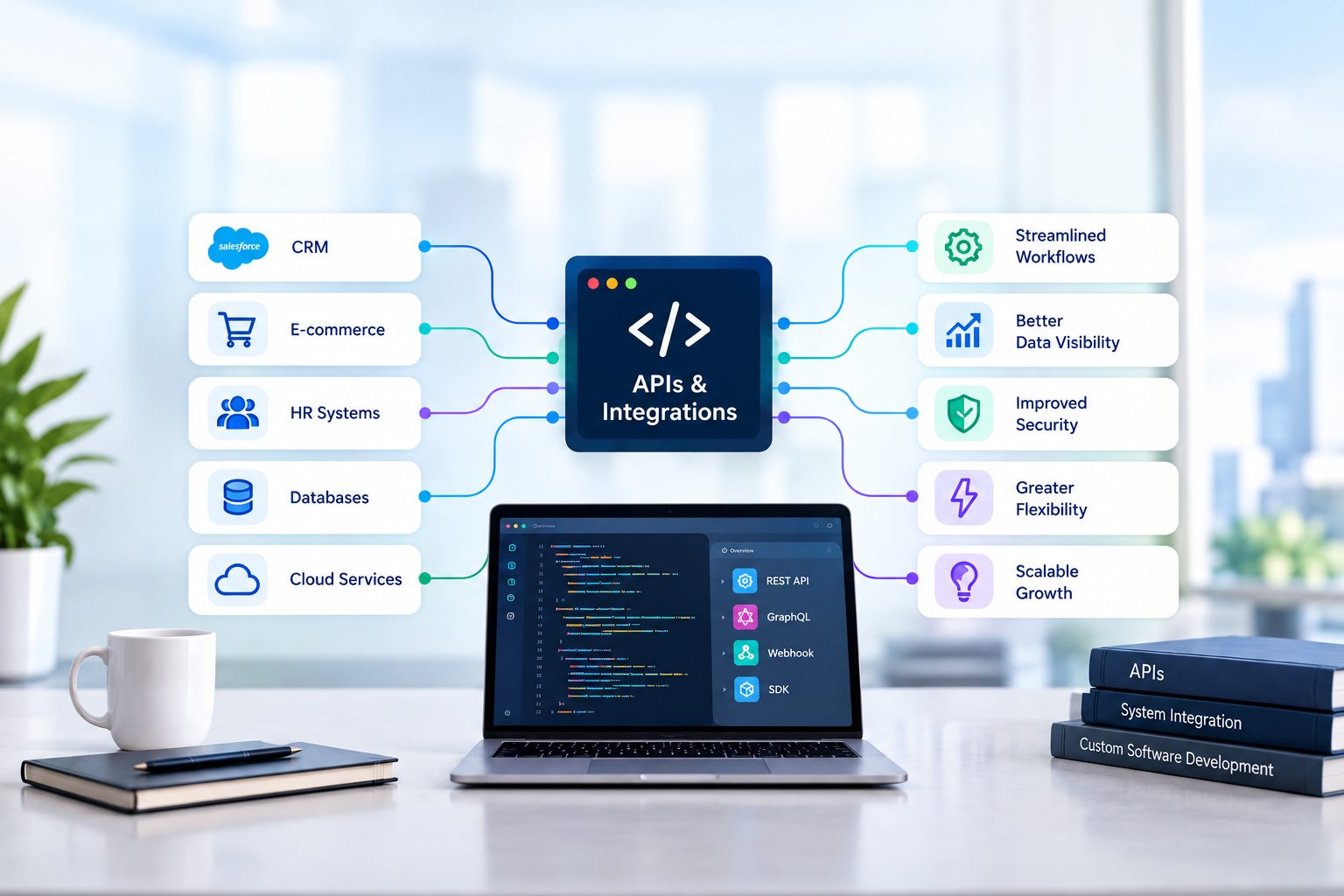
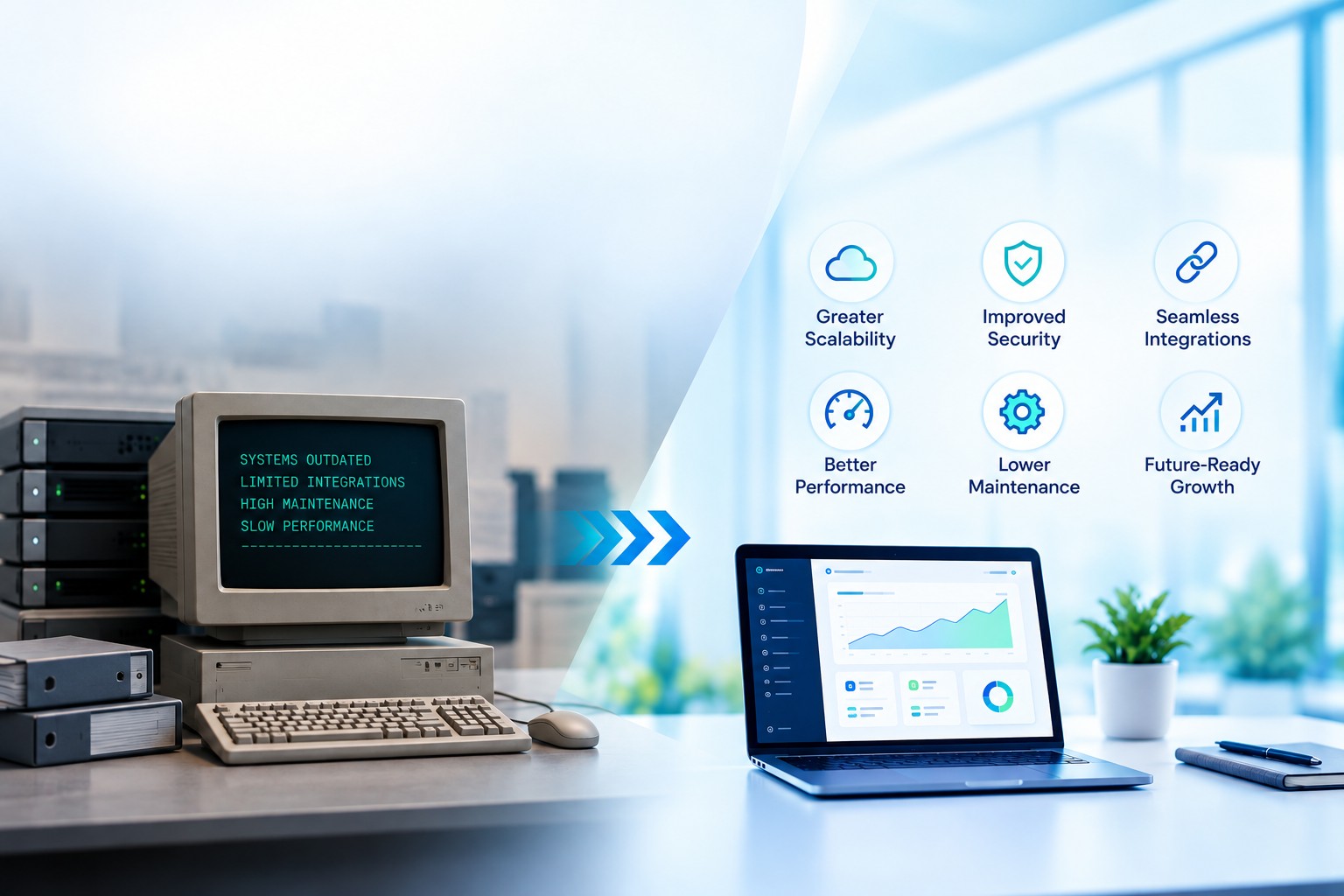
Building software for a startup is very different from building it for a large enterprise. Both may want better automation, smoother workflows, and room to grow. But their budgets, teams, users, processes, and technical requirements can be worlds apart.
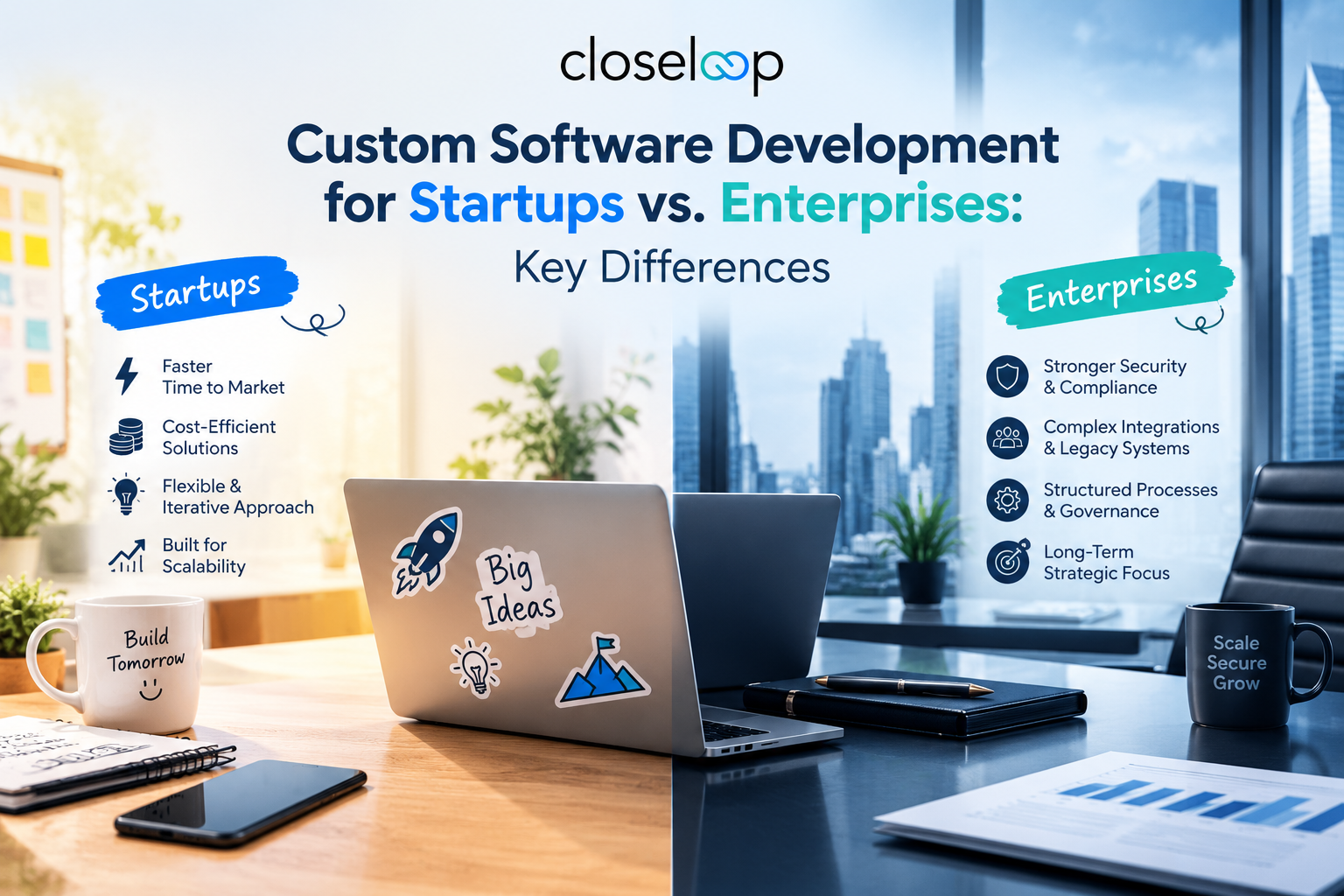
That is why Custom Software Development Services need to be shaped around the business rather than treated as a standard package. A startup may need a focused product that can reach users quickly. An enterprise may need a secure platform that connects multiple departments and existing systems. So, what really changes between the two?
Startups Usually Focus on Speed and Validation
For a startup, software is often closely tied to the business idea itself. The company may be testing a new product, entering a market, or trying to solve a problem that existing tools do not address properly.
Budget is usually a major consideration. Instead of building every possible feature, startups often benefit from identifying the features users need most and developing those first.
This is where an MVP can make sense. A smaller first version allows the business to test its idea, collect feedback, and improve the product based on real usage.
The technology still needs to be built properly, though. Cutting unnecessary features is smart. Cutting corners on security or architecture can become expensive later.
Enterprises Start With More Complex Requirements
Enterprises usually have established systems and processes before a new software project begins. They may already use CRM, ERP, accounting, HR, analytics, and other platforms across different departments.
A new application therefore needs to fit into this environment. Closeloop's custom software approach begins with understanding business processes, challenges, and objectives before developing the solution. Its services cover custom applications, enterprise platforms, cloud solutions, mobile and web applications, and legacy modernization.
For an enterprise, the question is often not simply "What should we build?" It is also "How will this fit with everything we already have?"
AI is changing how software development companies design, build, and maintain digital products. Explore AI and the Future of Software Development in the USA to learn how businesses can benefit from AI-driven development.
Scope Is Usually the Biggest Difference
A startup may have a small team and a relatively focused product. An enterprise project can involve several departments, locations, user groups, and business functions.
For example, a startup might need a customer-facing web application with an administrative dashboard. An enterprise could need a platform connecting sales, finance, operations, customer support, and external systems.
This difference affects almost everything, including planning, testing, security, integrations, documentation, and training.
Custom Software Development Services for enterprises therefore tend to involve more discovery and coordination before development begins.
Budget Planning Takes Different Forms
Startups usually need to be careful with every development expense. They may have limited funding and need to show market traction before making a larger investment.
A practical approach is to prioritize features based on business value. What does the user actually need? Which feature solves the biggest problem? What can wait?
Enterprises may have larger technology budgets, but that does not mean cost becomes unimportant. Enterprise projects can involve many stakeholders and complex infrastructure.
A seemingly small change can affect several systems or departments. Good planning helps prevent scope creep and keeps resources focused on the business goals.
Scalability Matters to Both
A startup may have 100 users today and thousands tomorrow. An enterprise may already have thousands of users and expect further expansion. That means scalability should be considered from the beginning.
Closeloop emphasizes cloud-native and scalable architectures designed to grow with changing business demands. Its development approach also focuses on future-ready solutions rather than creating software that only works for today's requirements.
For startups, this can mean preparing for rapid user growth. For enterprises, it can mean supporting larger workloads, additional locations, or new business units without rebuilding the entire system.
Also Read: Custom Software vs Off-the-Shelf Software: Which Is Better for Growing Businesses?
Integrations Become Critical for Enterprises
Startups sometimes have fewer systems to connect. An early-stage company may only need its software to work with a payment platform, CRM, analytics tool, or communication service. Enterprises usually have a much larger integration landscape.
A new application may need to communicate with an ERP, CRM, data warehouse, cloud platform, internal database, or third-party API. If these connections are poorly planned, employees can end up moving information manually between systems.
Custom software can be designed with these integration requirements in mind. Closeloop specifically highlights integration capabilities for CRMs, ERPs, cloud platforms, APIs, and other business systems.
Team Structure Is Also Different
A startup may work with a small internal team and an external development partner. Communication can be direct, and decisions can often be made quickly. Enterprise projects usually involve more people. Business leaders, IT teams, product managers, security teams, department heads, and end users may all have input.
That can make communication slower if responsibilities are unclear. A strong project structure helps. Everyone should know who makes decisions, who reviews requirements, and who signs off on important stages.
Startups Need Flexibility, Enterprises Need Coordination
The difference can be summed up fairly simply. Startups often need flexibility. They are still learning what their customers want and may change direction quickly. Enterprises often need coordination. Their software must work across established processes, teams, systems, and policies.
Neither situation is easy. They simply create different development challenges. Businesses exploring the topic further can also read Closeloop's Customized Software Development Services guide, which explains how tailored software can support business workflows, productivity, and long-term growth.
Startup vs. Enterprise Software Development
| Area | Startups | Enterprises |
|---|---|---|
| Main priority | Speed and validation | Scale and integration |
| Budget | Often tightly controlled | Usually larger but complex |
| Users | Smaller initial audience | Large user base |
| Features | Focused feature set | Broad functionality |
| Integrations | Usually fewer | Often extensive |
| Testing | Focused workflows | Multiple complex scenarios |
| Security | Essential | Often highly structured |
| Legacy systems | Usually limited | Often significant |
| Decision-making | Faster | More stakeholders |
Choosing the Right Development Approach
Before starting a project, businesses should define what they are trying to achieve. Startups should identify their core users, essential features, expected growth, and available budget. Enterprises should also map existing systems, integrations, security requirements, users, and internal processes.
The technology stack matters too, but it should support the business rather than drive the project.
A good development partner should be able to understand both sides. Technical knowledge is important, but so is understanding why the software is being built in the first place.
Conclusion
Startups and enterprises can both gain significant value from tailored software, but they need different approaches. Startups often prioritize speed, flexibility, and controlled investment. Enterprises generally place greater emphasis on scalability, integrations, security, modernization, and coordination.
Custom Software Development Services should reflect these differences instead of forcing every business through the same process. When development begins with real business needs and keeps future growth in view, the resulting software can become a useful long-term asset rather than just another application. With its expertise in tailored digital solutions, Closeloop helps businesses build software aligned with their current needs and future growth.
Author

Swetha GP

VP of Delivery
She is a VP of Delivery at Closeloop. A communicator, business analyst, and engineering aficionado. Besides handling client relations, and engineering duties, she loves to pour her thoughts on paper. She writes about engineering, technologies, frameworks, and everything related to the software domain. She reads, spends time with family, and enjoys a good walk in nature in her free time. Her dream destination is Greece.
Frequently Asked Questions
Connect with our experts to assess your actual workflows and find the right fit. For any queries, reach out to sales@closeloop.com
Stay abreast of what's trending in the world of technology
When Standard NetSuite Workflows Fall Short: Implementation, Integration, and Customization...
NetSuite is one of the most capable cloud ERP platforms available, but no out-of-the-box...

From Business Bottlenecks to Digital Products: How to Evaluate Software Development Partners in the...
Every growing business eventually hits a wall. Spreadsheets multiply, teams re-enter the same...

The Hidden Cost of Disconnected Logistics Systems: A Software Architecture Approach to End-to-End...
A shipment leaves the warehouse on time, yet the customer calls twice asking where it is....
The Role of APIs and Integrations in Modern Custom Software Development
No application works alone anymore. Your CRM talks to your billing tool, your mobile app...