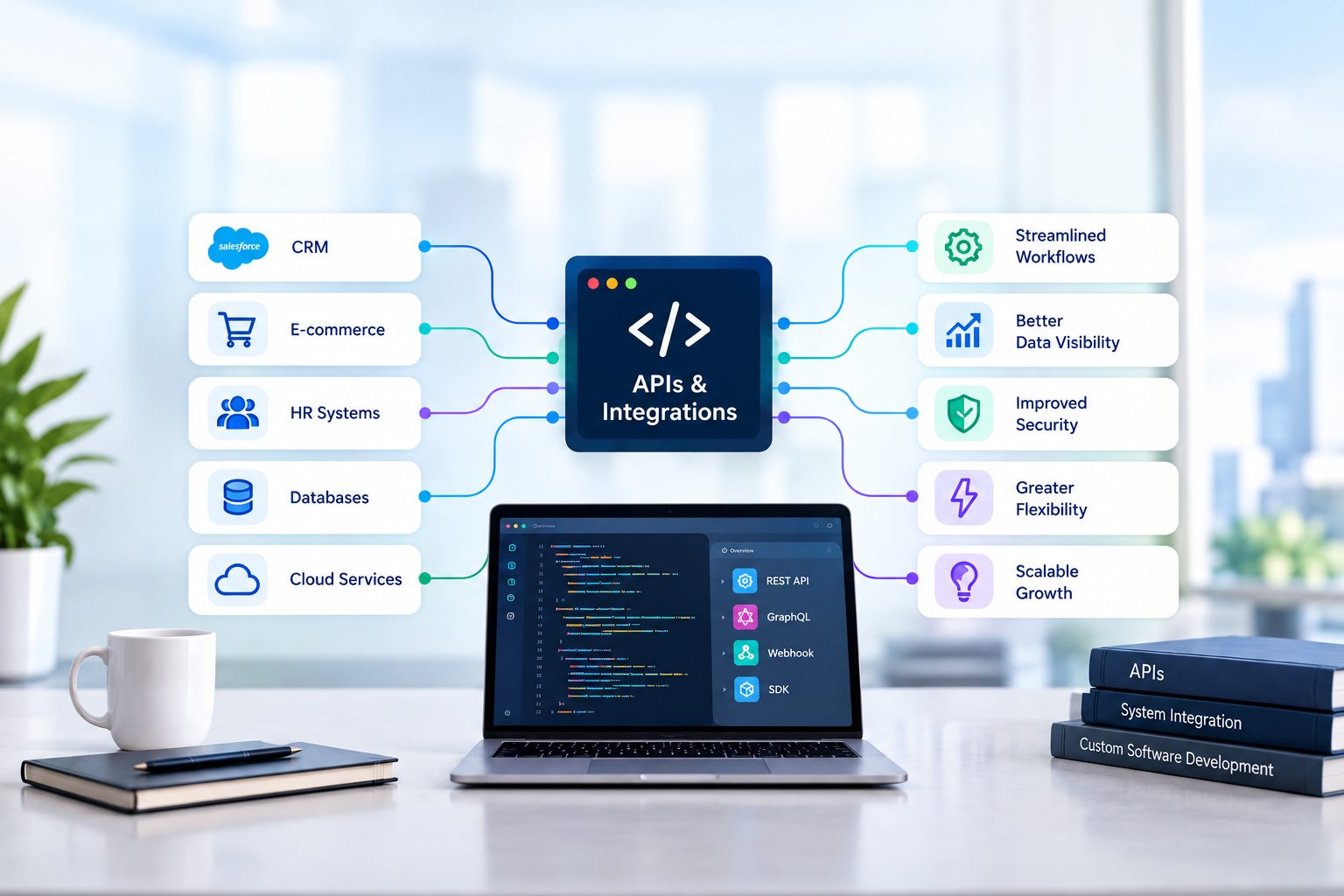
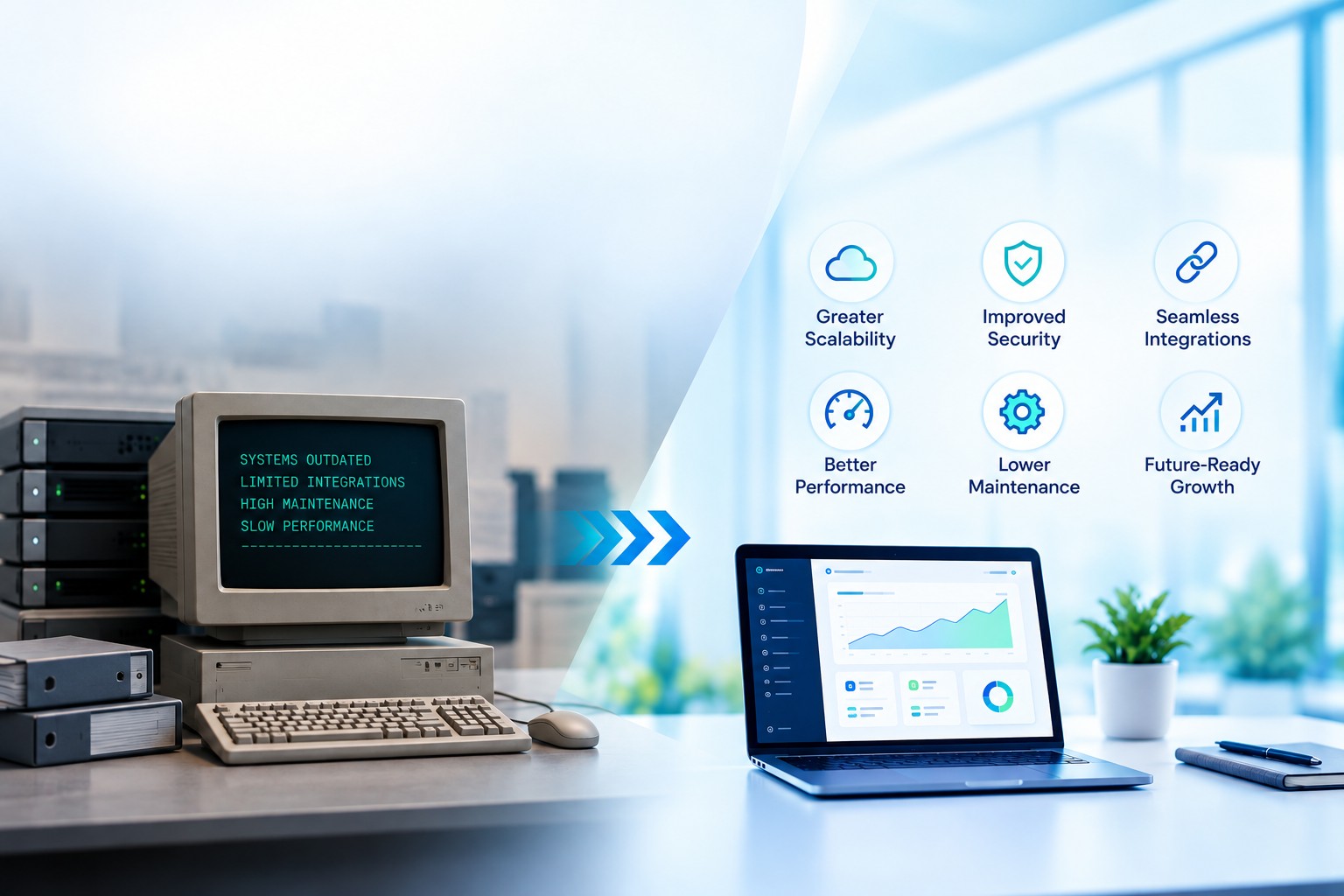
Not all software development companies work the same way, and that difference matters more than most businesses realize until they're mid-project. Traditional software development companies tend to follow rigid, one-size-fits-all processes, while a modern development partner like Closeloop is built around flexibility, platform expertise, and long-term business outcomes. If you're trying to understand what is custom software development and why the choice of partner matters just as much as the technology itself, this comparison breaks down the real differences.
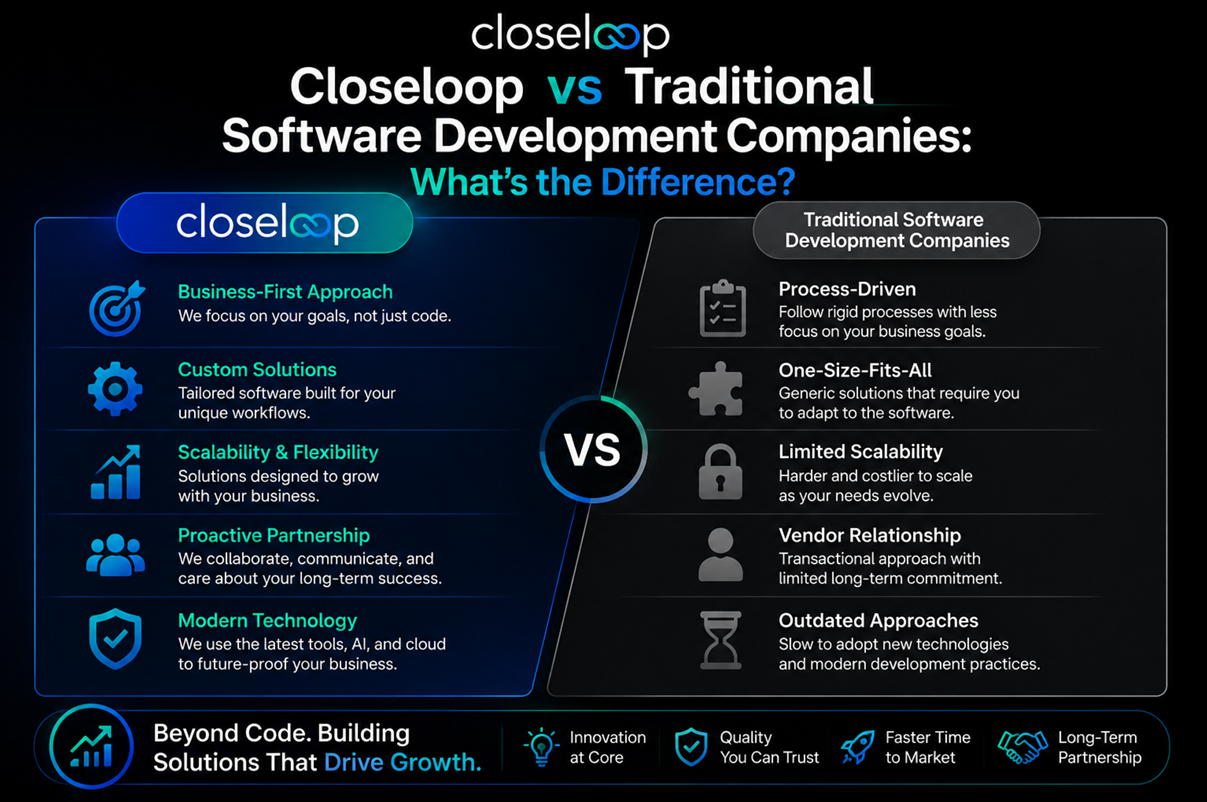
What Are Traditional Software Development Companies?
Traditional software development companies typically operate on fixed methodologies, standardized contracts, and a "build it and hand it off" model. This approach worked reasonably well when software requirements were static and businesses didn't need frequent updates.
Common traits of traditional development shops include:
- Rigid project scopes defined upfront, with limited room for change
- Heavy reliance on generic development processes regardless of industry
- Long development cycles with infrequent check-ins
- Limited platform specialization a "we can build anything" approach that often means no deep expertise anywhere
- Support that ends shortly after launch, leaving businesses to handle updates alone
For simple, well-defined projects, this model can still work. But for growing businesses with evolving needs, it often creates friction.
What Makes Closeloop Different?
Closeloop approaches software development as an ongoing partnership rather than a one-time transaction. Instead of applying the same process to every client, the focus is on understanding a business's specific workflows, systems, and growth stage before recommending a solution.
This shows up in a few concrete ways:
- Platform depth, not just general coding ability from custom CRM development to enterprise platforms, projects are handled by teams with direct experience in the specific systems involved
- Iterative delivery working software is delivered in stages, so businesses can give feedback early instead of waiting months to see results
- Integration-first thinking new software is built to work with what a business already has, rather than existing in isolation
- Continued support after launch the relationship doesn't end at deployment
Also Read: Home Run Financing: AI-Powered Platform Development for Smarter Sales Automation
Key Differences Between Closeloop and Traditional Development Companies
Development Approach
Traditional companies often follow waterfall-style processes: gather requirements, build, deliver, done. Closeloop typically works in iterative sprints, allowing businesses to adjust priorities as market conditions or internal needs shift a meaningful advantage for companies that are still scaling and learning what they need.
Platform and Technology Specialization
Many traditional firms position themselves as generalists capable of building "anything." In practice, this often means shallow expertise across many tools. Closeloop's teams bring specialized experience across platforms businesses actually rely on, including HubSpot implementation services, NetSuite implementation services, and Adobe Commerce development, so businesses aren't the ones absorbing the learning curve.
Integration Capabilities
Modern businesses run on multiple connected systems CRM, ERP, marketing automation, and finance tools rarely operate in isolation. Traditional development companies sometimes treat integration as an afterthought. Closeloop builds integration into the process from the start, drawing on capabilities like Boomi integration services and MuleSoft integration services to connect disparate systems cleanly, which reduces the manual data entry and reconciliation work that fragmented systems tend to create.
Also Read: Cordance Celigo: NetSuite and Salesforce Integration for Equity Rollups
Cloud and Infrastructure Expertise
Scalable software depends on solid cloud infrastructure. While traditional firms may offer basic hosting support, Closeloop works directly with cloud-native development, including Azure development services and AWS development services, so infrastructure decisions are made with performance, security, and cost efficiency in mind from day one.
Communication and Transparency
Traditional development relationships often involve limited visibility between milestones, which can leave businesses uncertain about progress or budget. A partnership-driven model prioritizes regular updates, shared project tracking, and clear communication about scope changes before they become budget surprises.
Post-Launch Support
This is one of the most overlooked differences. Traditional companies frequently treat launch as the finish line. A long-term partner treats launch as the starting point, providing ongoing maintenance, performance monitoring, and iterative improvements as the business evolves.
Comparison at a Glance
| Factor | Traditional Development Companies | Closeloop |
|---|---|---|
| Development approach | Often rigid, waterfall-based | Iterative, feedback-driven |
| Platform expertise | Broad but often shallow | Deep expertise in specific platforms and tools |
| Integration focus | Frequently an afterthought | Built in from project start |
| Cloud infrastructure | Basic hosting support | Native cloud development (Azure, AWS) |
| Communication | Milestone-based, limited visibility | Ongoing, transparent updates |
| Post-launch relationship | Often ends at delivery | Continues with support and iteration |
| Best suited for | Simple, fixed-scope projects | Growing, evolving businesses |
Why Growing Businesses Choose Closeloop Over Traditional Firms
Growing companies rarely have static requirements what worked at 20 employees often doesn't work at 200. This is where the difference between a transactional vendor and a long-term partner becomes clear.
Example: A mid-sized retail business using a generic ERP setup from a traditional vendor might struggle when it needs to connect its e-commerce platform, inventory system, and finance software together. Businesses evaluating this kind of challenge often start by researching the top NetSuite implementation companies in the USA to see how experienced partners handle multi-system rollouts without disrupting daily operations.
Example: A B2B company that already uses NetSuite but needs it connected to other tools may benefit from resources like a Celigo NetSuite integration guide, which shows how integration platforms can reduce manual work between systems the kind of practical, platform-specific insight that's harder to get from a generalist development shop.
Businesses in this position typically look for a partner who understands both the technology and the operational context, which is why many compare notes on top-rated custom software development companies before committing to a long-term engagement.
How to Evaluate a Software Development Partner
Whether comparing Closeloop to a traditional firm or evaluating any development partner, a few questions help clarify fit:
- Do they specialize in the platforms your business actually uses, or do they claim broad, general capability across everything?
- How do they handle integration with your existing systems, and do they have direct experience with your specific tools?
- What does their post-launch support actually include is it ongoing, or does the relationship end at delivery?
- How transparent is their communication process, and will you have visibility into progress and budget throughout the project?
- Can they scale with you if your requirements change significantly over the next few years?
Conclusion
The difference between Closeloop and traditional software development companies isn't just about process it's about what happens after the first version of the software ships. Traditional firms are often built for one-time delivery, while a modern development partner is built for the ongoing realities of a growing business: new integrations, evolving platforms, and changing priorities.
For businesses trying to decide who to work with, the right question isn't just "can they build it," but "will they still be a useful partner a year from now." That's the distinction worth weighing carefully before signing any development contract. To learn more about how this approach works in practice, visit Closeloop.
Author

Swetha GP

VP of Delivery
She is a VP of Delivery at Closeloop. A communicator, business analyst, and engineering aficionado. Besides handling client relations, and engineering duties, she loves to pour her thoughts on paper. She writes about engineering, technologies, frameworks, and everything related to the software domain. She reads, spends time with family, and enjoys a good walk in nature in her free time. Her dream destination is Greece.
Frequently Asked Questions
Still deciding between Closeloop and a traditional software development company? Connect with our experts to discuss your requirements and find the right fit for your project. For any queries, reach out to sales@closeloop.com
Stay abreast of what's trending in the world of technology
When Standard NetSuite Workflows Fall Short: Implementation, Integration, and Customization...
NetSuite is one of the most capable cloud ERP platforms available, but no out-of-the-box...

From Business Bottlenecks to Digital Products: How to Evaluate Software Development Partners in the...
Every growing business eventually hits a wall. Spreadsheets multiply, teams re-enter the same...

The Hidden Cost of Disconnected Logistics Systems: A Software Architecture Approach to End-to-End...
A shipment leaves the warehouse on time, yet the customer calls twice asking where it is....
The Role of APIs and Integrations in Modern Custom Software Development
No application works alone anymore. Your CRM talks to your billing tool, your mobile app...