Picking a custom software development partner is one of those decisions that quietly shapes everything that comes after it. Get it right, and you end up with a system that fits how your team actually works. Get it wrong, and you're stuck rebuilding something that should have worked the first time.
The US has thousands of software development companies, ranging from boutique product studios to large engineering firms with global delivery teams. Some are built for fast-moving startups that need an MVP in months, not years. Others are set up for enterprises that need compliance, scale, and long-term system ownership.
This guide breaks down the best custom software development companies in the USA, what each one does well, and how to match a partner to your stage of growth, whether you're shipping your first product or modernizing a platform that runs your entire business.
What Is Custom Software Development and Why It Matters
Custom software development means building an application, platform, or system designed specifically around your business processes, instead of adapting your processes to fit a generic, off-the-shelf product.
Off-the-shelf tools work fine until your workflows get specific. At that point, you're either paying for features you don't use, working around limitations the software wasn't built to handle, or stitching together five different tools that don't talk to each other properly.
Custom software solves that by starting from your actual requirements: your data structure, your integrations, your compliance needs, and the way your team operates day to day. It costs more upfront than a subscription, but it scales with you instead of against you.
What to Look for in a Custom Software Development Partner
Before comparing companies, it helps to know what actually separates a strong partner from a vendor that just writes code. A few things matter more than a polished portfolio page:
- Relevant industry experience. A team that's already built systems for healthcare, fintech, or logistics will spot problems you haven't thought of yet.
- A clear engagement model. Fixed scope, dedicated team, or staff augmentation the right model depends on how defined your requirements are.
- AI and cloud capability. Most modern systems need at least one of these built in from day one, not bolted on later.
- Communication and account ownership. US-based account leadership tends to mean faster decisions and fewer translation gaps, even when engineering is delivered globally.
- Post-launch support. A system that nobody maintains after launch becomes technical debt within a year.
With that in mind, here are the companies worth putting on your shortlist.
The Best Custom Software Development Companies in the USA
1. Closeloop - Best Overall for Startups and Enterprises
Closeloop is a Silicon Valley-based custom software development company that works with both early-stage startups and established enterprises, which is fairly rare for a firm of its size. The company has delivered 250+ projects across 15+ industries and supports 70+ enterprise and growth-stage clients, with over 80% of clients returning for additional phases of work.
What sets Closeloop apart is the breadth of services under one roof. Instead of working with separate vendors for software, cloud, and AI, businesses get a single team that owns the full stack:
- Custom Software Development - enterprise-grade web applications built around specific business logic and workflows
- AI Integration and Generative AI - practical AI features tied to measurable business outcomes, not automation for its own sake
- Cloud Engineering - AWS, Azure, and Google Cloud development, migration, and optimization
- Data Engineering - data platform modernization, migration, lakes, and warehousing
- CRM and ERP Implementation - Salesforce, HubSpot, and NetSuite
- Mobile App Development - native iOS/Android and cross-platform builds
- Product Strategy and Consulting - discovery, prototyping, and MVP validation before a single line of code gets written
Closeloop's team is managed from California with engineering delivered across four offices in the US and India, giving clients US-based accountability without paying a full US engineering rate. The company is recognized on the Inc. 5000 list of fastest-growing companies in America and maintains a 100% client satisfaction score.
Client feedback backs this up. Closeloop's automation work helped one client generate more business and double their sales, while another client noted that Closeloop reduced their interview scheduling time from 60% to under 10%. A founder who has worked with multiple development companies said Closeloop was the most efficient and easiest to work with of any agency they'd hired.
Best for: Businesses that want one accountable partner across software, cloud, data, and AI - instead of managing five different vendors.
Explore Closeloop's Custom Software Development Services →
2. ScienceSoft
ScienceSoft has been operating since 1989 and has built a strong reputation in enterprise-level software and advanced analytics, particularly for large companies operating in regulated spaces like finance, healthcare, and manufacturing. It's a solid pick for organizations that need deep compliance experience alongside engineering depth, though its scale and process overhead can feel heavier for smaller, fast-moving teams.
Best for: Large enterprises in regulated industries needing compliance-heavy custom platforms.
3. Fingent
Fingent is a US-headquartered firm with a delivery center in India, serving active clients across more than a dozen countries. The company has delivered over 800 projects across healthcare, finance, and logistics since 2003, and tends to lean on industry-specific playbooks rather than a one-size-fits-all build process.
Best for: Mid-market companies wanting a partner with deep vertical-specific experience.
4. Chetu
Chetu combines a US front office with a large India-based delivery team, giving it significant capacity. The firm has served more than 7,000 clients and delivered over 20,000 applications across healthcare, retail, and finance. It's a strong option when you need scale and speed at a lower cost, though some clients note that architecture depth and consistency can vary across projects.
Best for: Companies that need high development capacity at a lower cost point.
5. ELEKS
Active since 1991, ELEKS covers the full software development stack, from custom application development to AI, cloud migration, and legacy system modernization. With 2,000+ specialists and 1,000+ completed projects, it's well suited to organizations dealing with aging infrastructure that needs a careful, low-risk migration path.
Best for: Enterprises modernizing legacy systems without disrupting daily operations.
6. Intellias
Intellias focuses heavily on cloud architecture (AWS, Azure, GCP, Salesforce) and AI/ML projects, backed by a structured project management framework that's earned recognition from analysts like Gartner and Everest Group. It's a good fit for technically complex projects, though clients have noted that resourcing in the US can sometimes be slower than expected.
Best for: Companies running complex, multi-cloud or AI/ML-heavy engineering projects.
7. BairesDev
BairesDev is known for delivering custom software through dedicated, scalable development teams for businesses of varying sizes. The model works well for companies that want to ramp engineering capacity up or down quickly without going through a full hiring cycle each time.
Best for: Businesses needing flexible, on-demand engineering capacity.
8. Simform
Simform focuses on modern digital engineering, helping organizations build scalable software products with strong DevOps and cloud-native practices baked into the delivery process. It tends to suit product-led companies that care as much about engineering discipline as feature delivery.
Best for: Product-led companies prioritizing scalable architecture and DevOps maturity.
9. TatvaSoft
TatvaSoft specializes in enterprise-grade custom software, with particular strength in legacy modernization and modular application design. The firm has delivered more than 1,800 projects for over 800 clients, making it a dependable option for businesses replacing aging internal systems with something more maintainable.
Best for: Enterprises rebuilding internal systems into modular, maintainable platforms.
Custom Software Development: Startups vs. Enterprises
Startups and enterprises need fundamentally different things from a development partner, even when the end goal working software looks the same.
Startups usually need speed, flexibility, and a partner comfortable with ambiguity. Requirements shift as the product finds its market, so a rigid, fixed-scope process can slow things down at exactly the wrong time. Startups are typically better served by partners who can run lean discovery sprints, ship an MVP quickly, and iterate based on real user feedback.
Enterprises usually need structure, compliance, and integration depth. A new system has to work alongside existing ERPs, CRMs, and data infrastructure without breaking anything currently in production. Enterprises are usually better served by partners with documented QA processes, security certifications, and experience managing multi-team, multi-phase rollouts.
A handful of companies, Closeloop among them, are built to serve both ends of that spectrum without forcing either side into a process that doesn't fit their stage.
Also Read: How to Overcome Common Challenges in Legacy App Modernization
How to Choose the Right Custom Software Development Company
- Define your scope before you start shortlisting. Write down the problem you're solving, your must-have features, your timeline, and your budget range. Vague requirements lead to vague proposals.
- Ask for case studies in your industry. A portfolio full of e-commerce apps doesn't tell you much if you're building healthcare software with HIPAA requirements.
- Check how they handle communication. Ask who your day-to-day point of contact will be and how often you'll get updates. This matters more than most people expect once a project is underway.
- Review their post-launch support model. Find out what happens after launch bug fixes, feature updates, security patching and whether that's included or billed separately.
- Talk to current or past clients if possible. Case studies are curated. A short call with a reference client usually surfaces things a sales deck won't.
Key Takeaways
- Custom software development is worth the investment when off-the-shelf tools can't match how your business actually operates.
- The right partner depends on your stage: startups need speed and flexibility, enterprises need compliance and integration depth.
- Closeloop stands out for serving both ends of that spectrum with one team across software, AI, cloud, and data engineering.
- Always evaluate partners on industry experience, communication model, and postlaunch support, not just price per hour.
- Get a milestone-based estimate before committing, since complexity (not headline rate) usually drives the final cost.
Looking for a custom software development partner that scales with you from MVP to enterprise platform?
Author

Swetha GP

VP of Delivery
She is a VP of Delivery at Closeloop. A communicator, business analyst, and engineering aficionado. Besides handling client relations, and engineering duties, she loves to pour her thoughts on paper. She writes about engineering, technologies, frameworks, and everything related to the software domain. She reads, spends time with family, and enjoys a good walk in nature in her free time. Her dream destination is Greece.
Frequently Asked Questions
Ready to transform your business with custom software solutions? Connect with our experts to discuss your requirements and explore the best approach for your organization. For any queries, reach out to sales@closeloop.com
Stay abreast of what's trending in the world of technology
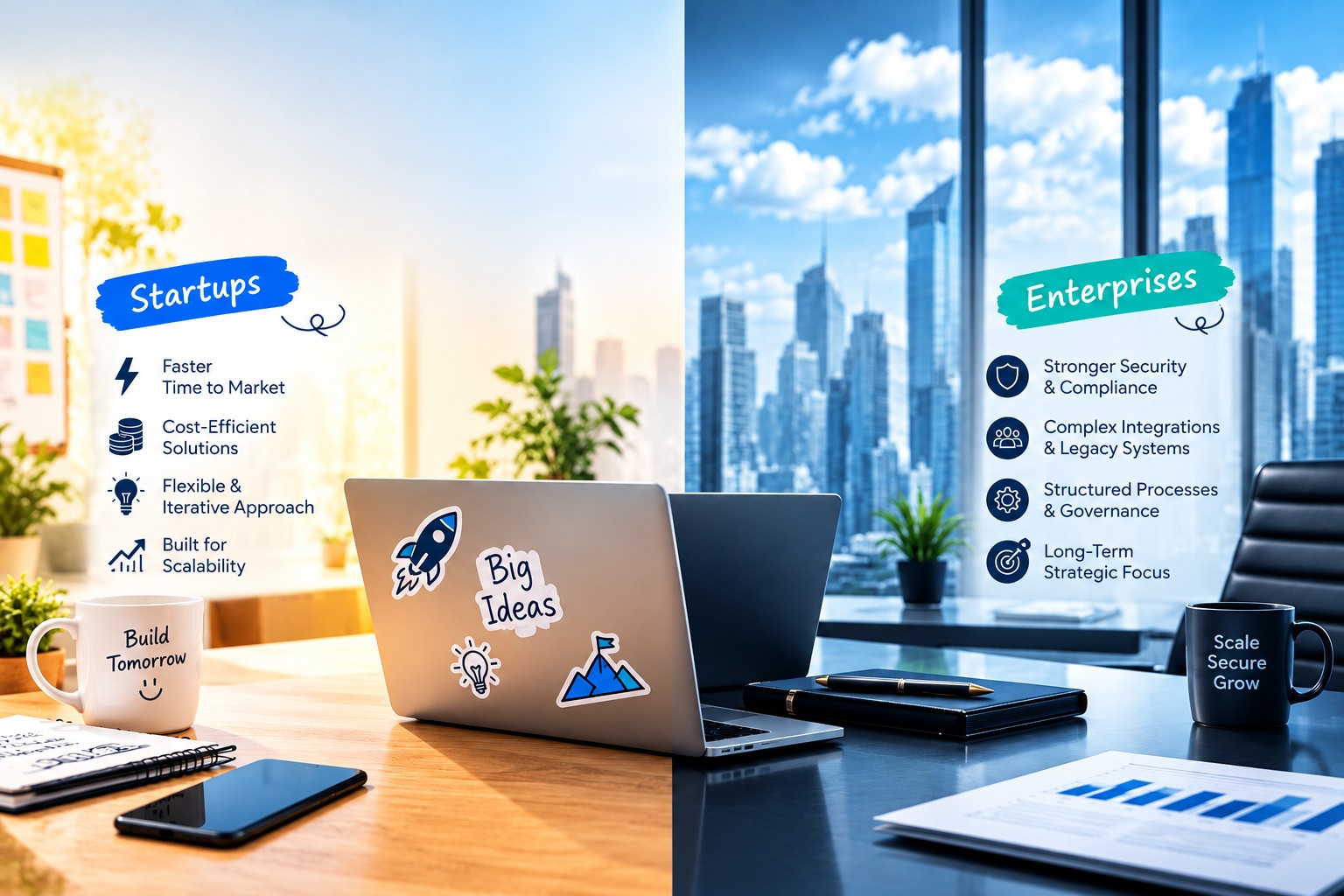
Custom Software Development for Startups vs. Enterprises: Key Differences
Building software for a startup is very different from building it for a large enterprise....
NetSuite Implementation for Startups vs. Enterprises: Key Differences
Choosing an ERP system is a big step for any business. For a startup, it may be the next move...
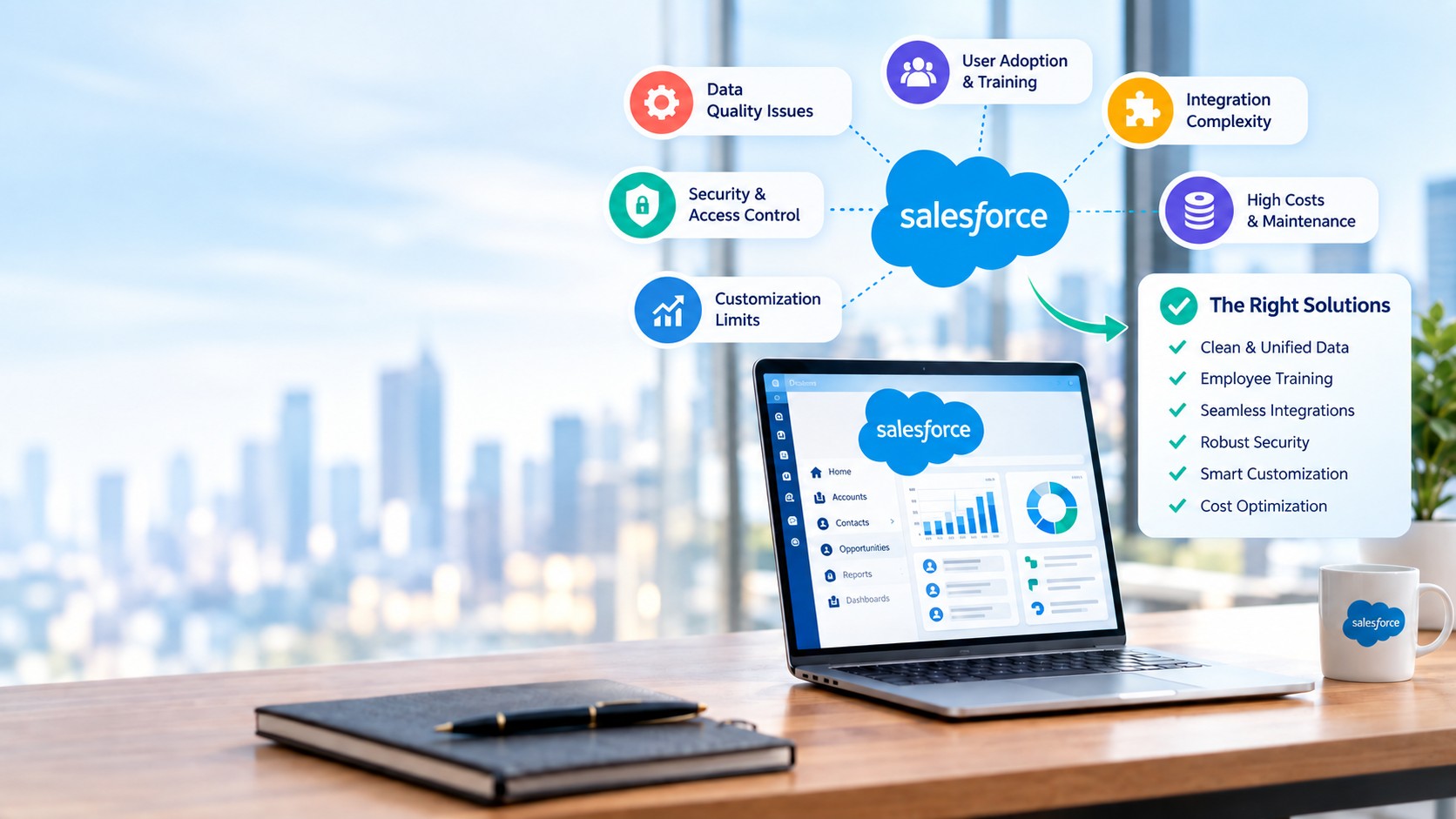
Common Salesforce CRM Challenges Businesses Face and How to Solve Them
Salesforce can bring sales, service, marketing, and customer data into one place. Yet simply...
How Custom Software Helps Businesses Scale More Efficiently
Growth sounds exciting until the systems behind the business start struggling to keep up. A...