The logistics industry is undergoing a rapid digital transformation as businesses look for smarter ways to manage transportation, warehousing, inventory, fleet operations, and last-mile deliveries. As supply chains become more interconnected and customer expectations continue to rise, organizations are investing in technology that improves visibility, streamlines operations, and supports long-term growth. Choosing the right Logistics Software Development Company is an important step toward building scalable solutions that align with your business goals and operational requirements.
Unlike generic software that forces businesses to adapt their workflows, custom logistics solutions are designed around specific operational processes. From real-time shipment tracking and warehouse automation to predictive analytics and intelligent route optimization, modern logistics software helps companies increase efficiency while delivering better customer experiences. In this guide, we'll explore why custom logistics software has become essential, the features businesses should prioritize, and some of the leading logistics software development companies in the USA that are helping organizations modernize their supply chains.
Why Businesses Are Investing in Custom Logistics Software
The logistics sector has become increasingly competitive over the past decade. Businesses are expected to deliver products faster, provide real-time shipment updates, optimize operational costs, and maintain complete visibility across their supply chains. Meeting these expectations with spreadsheets or disconnected software systems is no longer practical.
Today's logistics organizations require intelligent platforms capable of connecting warehouses, transportation providers, suppliers, customers, and internal teams into a single digital ecosystem. This is why many businesses are replacing traditional systems with customized logistics software that can scale alongside their operations.
Whether it's managing thousands of daily shipments or coordinating inventory across multiple distribution centers, custom software provides the flexibility needed to adapt to changing business requirements without sacrificing performance or security.
The Growing Need for Digital Logistics
Digital technologies are reshaping how logistics companies operate. Cloud computing, automation, artificial intelligence, and data analytics have transformed supply chain management from a reactive process into a proactive strategy.
Businesses investing in Digital Transformation Services are modernizing their logistics infrastructure to gain better operational visibility, reduce manual work, and improve collaboration across departments. Rather than relying on isolated applications for transportation, inventory, warehouse management, and reporting, organizations are adopting integrated logistics platforms that centralize business operations.
This digital-first approach not only improves operational efficiency but also enables faster decision-making through access to accurate, real-time data.
Common Challenges Logistics Companies Face
Every logistics business encounters operational challenges that impact productivity, profitability, and customer satisfaction. While these challenges vary depending on the size and complexity of the organization, several issues remain common across the industry.
Limited Supply Chain Visibility
Without centralized logistics software, tracking shipments, monitoring inventory, and coordinating transportation becomes increasingly difficult. Teams often work with outdated information, making it challenging to respond quickly to delays or unexpected disruptions.
Modern logistics platforms provide real-time dashboards that allow businesses to monitor every stage of the supply chain, improving communication between warehouses, drivers, suppliers, and customers.
Manual Processes and Repetitive Tasks
Many organizations continue to rely on spreadsheets, emails, and manual approvals for everyday logistics operations. These repetitive processes consume valuable time while increasing the risk of errors.
Implementing Business Process Automation Services helps automate order processing, shipment scheduling, inventory updates, invoicing, customer notifications, and approval workflows. Automation reduces operational bottlenecks while allowing employees to focus on strategic business initiatives.
Disconnected Enterprise Systems
Logistics operations often depend on multiple software platforms, including ERP systems, CRM platforms, warehouse management systems, accounting software, and transportation management tools. When these systems operate independently, data becomes fragmented across departments.
Using MuleSoft Integration Services, businesses can connect these applications into a unified ecosystem where information flows seamlessly between systems. This improves operational accuracy while eliminating duplicate data entry and reducing manual reconciliation.
Managing Large Volumes of Operational Data
Every shipment, delivery, warehouse transaction, and customer interaction generates valuable business data. However, collecting information alone isn't enough. Organizations need meaningful insights that help improve efficiency and support better decision-making.
With Data Engineering Services, businesses can organize and analyze logistics data to identify trends, forecast demand, monitor performance, and uncover opportunities for continuous improvement. Advanced analytics provide greater visibility into supply chain performance while supporting more informed business decisions.
Why Custom Logistics Software Delivers Greater Business Value
Off-the-shelf logistics software may provide standard functionality, but it often struggles to meet the evolving requirements of growing businesses. Every logistics organization has unique operational workflows, compliance requirements, customer expectations, and integration needs.
Custom software eliminates these limitations by allowing businesses to build technology around their existing operations instead of changing their processes to fit pre-built applications.
Through Custom Software Development Services, organizations can create scalable logistics platforms with features tailored to their specific business objectives. Whether integrating warehouse management, transportation planning, inventory control, customer portals, or reporting tools, custom software provides greater flexibility and long-term adaptability.
Another significant advantage is mobility. Logistics teams frequently work across warehouses, vehicles, ports, and remote locations, making mobile accessibility essential for daily operations.
By leveraging Mobile App Development Services, businesses can equip warehouse staff, dispatchers, drivers, and field personnel with secure mobile applications that provide real-time updates, digital documentation, route information, and instant communication from virtually anywhere.
Additionally, organizations moving away from legacy infrastructure often benefit from Cloud Migration Services, which improve scalability, system availability, and collaboration while reducing dependence on on-premises hardware. Cloud-native logistics platforms also make it easier to support distributed teams and integrate emerging technologies as business requirements evolve.
Also Read: How Closeloop Transformed ACG's Yard Operations With 100% Visibility and 90% Efficiency Gains
What to Look for in a Logistics Software Development Company
Selecting a technology partner involves much more than evaluating technical expertise. The right development company should understand the operational complexities of logistics while delivering software that supports long-term business growth.
Some of the most important qualities to look for include:
- Proven experience developing logistics and supply chain software
- Strong expertise in cloud-native application development
- Experience with artificial intelligence and automation
- Seamless integration with ERP, CRM, and warehouse systems
- Scalable architecture that supports business growth
- Ongoing maintenance, support, and continuous product improvement
- A collaborative development approach that aligns with business objectives
Companies that also offer AI Development Services can further enhance logistics operations through intelligent route optimization, predictive maintenance, demand forecasting, shipment risk analysis, and automated decision-making.
Also Read: Digitizing Proof of Delivery for Grocery Supply Company
Top Logistics Software Development Companies in the USA
Finding the right logistics software development partner involves more than comparing portfolios or years of experience. Every business has unique operational challenges, whether it's managing warehouse operations, optimizing transportation routes, integrating multiple business systems, or improving supply chain visibility. The companies below are recognized for their expertise in custom software development and enterprise technology solutions, making them strong options for organizations looking to modernize their logistics operations.
1. Closeloop
Closeloop is a Silicon Valley-based software development company that specializes in building custom digital solutions for startups, growing businesses, and enterprises across multiple industries. With extensive experience in logistics, retail, manufacturing, healthcare, and enterprise technology, the company develops scalable software that helps businesses improve operational efficiency and accelerate digital transformation.
For logistics organizations, Closeloop builds customized transportation management systems (TMS), warehouse management solutions (WMS), fleet management platforms, shipment tracking applications, inventory management systems, customer portals, and supply chain management software. Every solution is designed around the client's operational workflows, enabling greater flexibility, improved visibility, and long-term scalability.
One of Closeloop's key strengths is its ability to combine logistics expertise with modern technologies. In addition to logistics software, the company offers Custom Software Development Services, AI Development Services, Business Process Automation Services, Cloud Migration Services, and Mobile App Development Services. This allows businesses to automate repetitive tasks, modernize legacy applications, improve data accessibility, and create connected digital ecosystems.
Closeloop also helps businesses integrate logistics platforms with ERP systems, CRM software, warehouse management tools, payment gateways, and third-party APIs. Organizations looking for an end-to-end technology partner that can support both software development and long-term digital innovation often consider Closeloop for its collaborative approach and focus on delivering tailored solutions rather than one-size-fits-all products.
2. ScienceSoft
ScienceSoft has decades of experience delivering enterprise software solutions across industries, including logistics and transportation. The company develops transportation management systems, warehouse management software, inventory solutions, and supply chain applications that help organizations improve operational efficiency. Its expertise in enterprise integrations, cloud technologies, and analytics makes it a strong choice for businesses managing large-scale logistics environments.
3. Simform
Simform is known for developing cloud-native applications and scalable enterprise software. The company works with logistics businesses to build transportation management platforms, warehouse solutions, and custom operational software using agile development methodologies. Its focus on modern technology stacks makes it suitable for organizations modernizing legacy systems.
4. ELEKS
ELEKS provides enterprise software engineering services with experience in transportation and logistics solutions. The company develops custom software that improves supply chain visibility, operational efficiency, and business intelligence while helping organizations adopt emerging technologies such as AI and cloud computing.
5. BairesDev
BairesDev offers custom software development services through dedicated engineering teams. The company has experience building logistics applications, transportation management systems, and enterprise platforms for organizations seeking scalable digital solutions backed by modern development practices.
6. Andersen
Andersen develops enterprise software for industries including logistics, manufacturing, finance, and healthcare. Its logistics expertise includes warehouse management, transportation software, and supply chain solutions designed to improve operational performance and system integration.
7. Itransition
Itransition specializes in enterprise application development and digital transformation. The company develops logistics management systems, warehouse software, and supply chain applications that help organizations improve visibility, automate operations, and support business growth.
8. Fingent
Fingent delivers custom business software tailored to operational requirements across multiple industries. Its logistics solutions include inventory management systems, warehouse software, and transportation applications that help businesses streamline processes and improve efficiency.
9. Velvetech
Velvetech develops logistics and transportation software with expertise in fleet management, dispatch systems, IoT-enabled tracking, and mobile applications. The company focuses on helping businesses improve operational visibility through connected digital solutions.
10. Iflexion
Iflexion provides enterprise software development services for organizations looking to modernize logistics and supply chain operations. Its capabilities include transportation management systems, warehouse management software, cloud-based applications, and enterprise integrations that support long-term digital transformation.
Also Read: Top Digital Transformation Service Providers in the USA: How to Choose the Right Partner
Why the Right Technology Partner Matters
Selecting a logistics software development company isn't simply about choosing the provider with the largest portfolio or longest history. The right partner should understand your operational challenges, recommend technologies that align with your business objectives, and build software that can evolve as your organization grows.
Look for a company that offers expertise beyond software development, including cloud infrastructure, automation, artificial intelligence, data management, and enterprise integrations. A technology partner with broad capabilities can help create a connected logistics ecosystem instead of isolated software solutions, making it easier to scale operations and adapt to changing business requirements.
Essential Features of Modern Logistics Software
The effectiveness of any logistics platform depends on the features it offers and how well those features align with a company's operational needs. A well-designed solution should do more than automate daily tasks it should provide real-time visibility, improve decision-making, and create a connected ecosystem that supports every stage of the supply chain.
Transportation Management System (TMS)
A Transportation Management System helps businesses plan, execute, and monitor the movement of goods. It simplifies carrier management, shipment planning, freight optimization, and delivery scheduling while providing real-time tracking throughout the transportation process.
An effective TMS enables logistics teams to reduce delays, improve route planning, and enhance customer satisfaction through better shipment visibility.
Warehouse Management System (WMS)
Warehouse operations play a critical role in supply chain performance. A Warehouse Management System helps businesses manage inventory, optimize storage space, streamline order fulfillment, and improve picking and packing accuracy.
When integrated with transportation and inventory systems, warehouse software provides complete visibility into stock movement and warehouse performance.
Fleet Management and GPS Tracking
For businesses operating their own fleet, real-time vehicle tracking is essential. Fleet management software allows organizations to monitor vehicle locations, driver performance, fuel usage, maintenance schedules, and delivery progress from a centralized dashboard.
These insights help reduce operational inefficiencies while improving driver safety and asset utilization.
Inventory Management
Inventory accuracy directly impacts customer satisfaction and operational efficiency. Modern logistics software provides real-time inventory tracking across warehouses and distribution centers, reducing stock discrepancies and helping businesses maintain optimal inventory levels.
Integrated inventory management also supports faster order fulfillment and more accurate forecasting.
Route Optimization
Efficient route planning helps logistics companies reduce travel time, lower fuel consumption, and improve delivery performance.
Modern software uses intelligent algorithms to analyze factors such as traffic conditions, delivery priorities, vehicle capacity, and geographic constraints, allowing businesses to optimize routes and respond quickly to unexpected changes.
Real-Time Analytics and Reporting
Data has become one of the most valuable assets in logistics. Advanced dashboards and reporting tools provide insights into shipment performance, warehouse productivity, transportation costs, delivery timelines, and operational KPIs.
Organizations leveraging Data Engineering Services can transform large volumes of operational data into meaningful business intelligence that supports strategic decision-making and continuous process improvement.
Industries That Benefit from Logistics Software
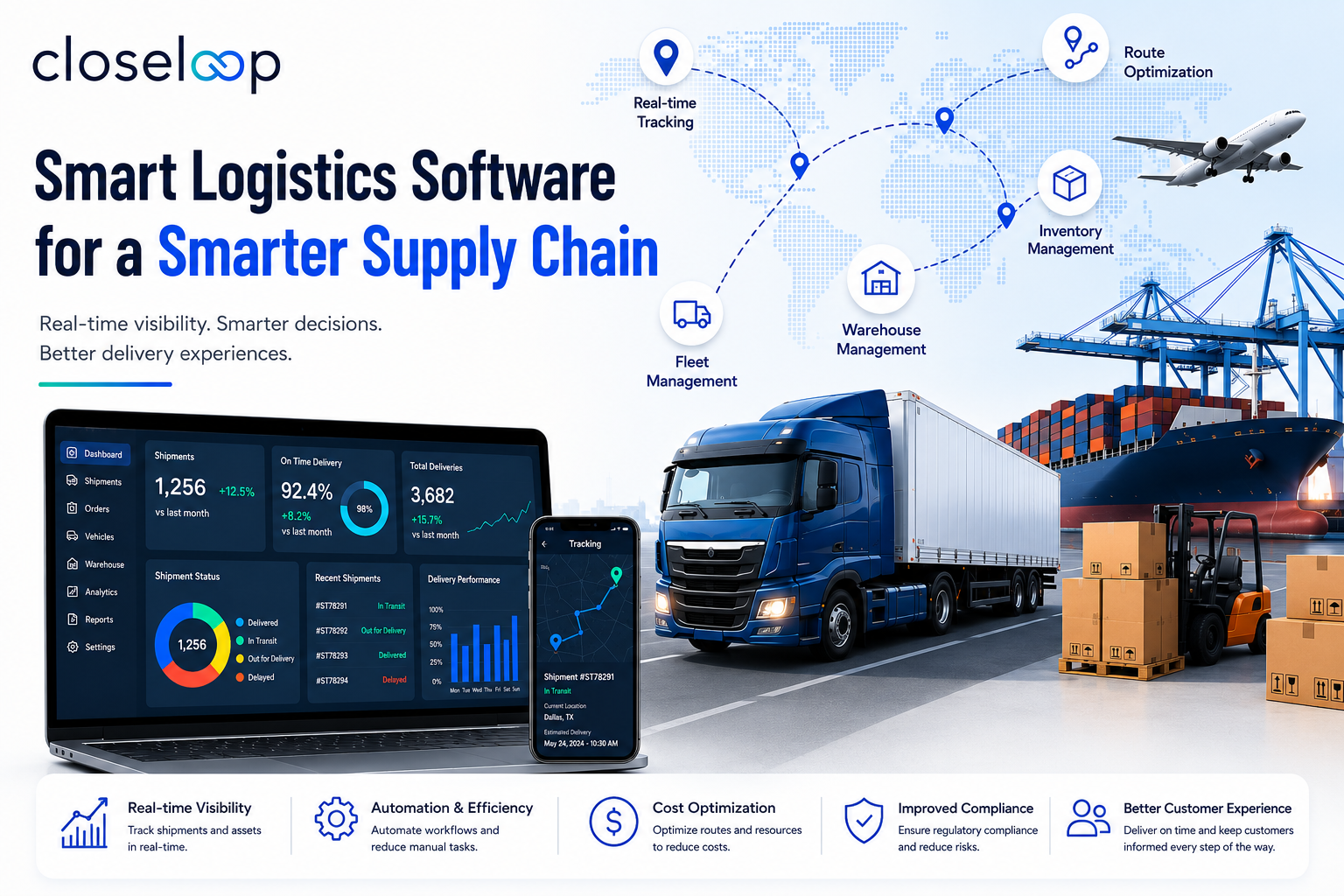
Although logistics software is commonly associated with transportation companies, its benefits extend across a wide range of industries that depend on efficient supply chain management.
Retail and eCommerce
Retailers and eCommerce businesses rely on logistics software to manage inventory, process customer orders, coordinate warehouse operations, and improve last-mile delivery. Real-time visibility into stock levels and shipments enables businesses to provide accurate delivery updates and improve customer satisfaction.
Manufacturing
Manufacturers use logistics software to coordinate raw material procurement, production schedules, warehouse management, and product distribution. Integrated logistics systems help reduce production delays while improving collaboration between suppliers and manufacturing facilities.
Healthcare
Healthcare organizations require highly reliable logistics systems to manage medical equipment, pharmaceuticals, laboratory supplies, and temperature-sensitive products. Custom software helps ensure inventory accuracy, regulatory compliance, and timely deliveries across healthcare networks.
Third-Party Logistics (3PL)
Third-party logistics providers manage transportation and warehousing for multiple clients simultaneously. Custom logistics software enables them to automate operations, monitor shipments in real time, and provide clients with centralized reporting and tracking capabilities.
Food and Beverage
The food and beverage industry depends on precise inventory management and timely deliveries. Logistics software helps businesses monitor expiration dates, maintain cold chain integrity, and improve distribution efficiency while ensuring compliance with industry regulations.
How to Choose the Right Logistics Software Development Company
Selecting the right technology partner requires careful evaluation beyond technical expertise. Businesses should look for a development company that understands logistics operations and can deliver solutions designed for long-term growth.
Industry Experience
A company with experience in logistics and supply chain software is better equipped to understand operational workflows, compliance requirements, and industry-specific challenges. Reviewing previous projects and relevant case studies can provide valuable insights into a company's capabilities.
Technical Expertise
Modern logistics software often incorporates cloud computing, automation, artificial intelligence, analytics, IoT, and API integrations. Choosing a development partner with expertise across these technologies ensures your solution remains scalable and adaptable as business needs evolve.
Integration Capabilities
Logistics software rarely operates as a standalone application. It should integrate seamlessly with ERP platforms, CRM systems, warehouse management software, accounting tools, and third-party logistics providers.
Companies offering MuleSoft Integration Services can help build connected ecosystems where data flows efficiently across business systems, reducing manual work and improving operational visibility.
Scalability and Flexibility
As businesses grow, their software should grow with them. A scalable architecture allows organizations to add new users, locations, integrations, and features without requiring a complete system rebuild.
Cloud-native applications developed through Cloud Migration Services provide the flexibility needed to support changing business requirements while improving performance and system reliability.
Long-Term Support
Software development doesn't end after deployment. Regular updates, security enhancements, performance optimization, and feature improvements are essential for maintaining a reliable logistics platform. Partnering with a company that offers ongoing support helps ensure the software continues to deliver value over time.
Emerging Trends in Logistics Software Development
Technology continues to reshape the logistics industry, enabling businesses to operate more efficiently while responding to changing customer expectations.
Artificial Intelligence and Automation
Artificial intelligence is improving logistics through predictive analytics, demand forecasting, intelligent route planning, and automated decision-making. Organizations investing in AI Development Services can leverage machine learning to optimize operations and identify opportunities for continuous improvement.
Internet of Things (IoT)
IoT-enabled sensors provide real-time tracking of vehicles, shipments, warehouse equipment, and inventory. These connected devices improve visibility while helping businesses monitor asset performance and respond quickly to operational issues.
Cloud-Based Logistics Platforms
Cloud computing has become the preferred foundation for modern logistics applications. Cloud platforms improve accessibility, scalability, collaboration, and disaster recovery while reducing infrastructure complexity.
Predictive Analytics
Rather than reacting to disruptions after they occur, predictive analytics enables businesses to anticipate demand fluctuations, identify potential delays, and optimize resource planning using historical and real-time data.
Connected Digital Ecosystems
Modern logistics software increasingly integrates with CRM platforms, ERP systems, accounting software, warehouse management tools, and customer portals. Businesses adopting HubSpot Implementation Services alongside logistics software can improve communication between sales, customer support, and operations while creating a more connected customer experience.
Choosing the Right Logistics Software Development Partner
Technology has become a driving force behind modern logistics, enabling businesses to improve supply chain visibility, automate operations, and deliver better customer experiences. Choosing the right development partner is just as important as selecting the right technology, as a well-designed solution should support both current operational needs and future business growth.
The companies featured in this guide each bring unique strengths to logistics software development. However, businesses looking for customized, scalable, and future-ready solutions should prioritize partners that combine industry expertise with modern technologies such as AI, cloud computing, automation, and enterprise integrations. With experience delivering Custom Software Development Services, intelligent automation, cloud solutions, and logistics-focused applications, Closeloop helps organizations build digital platforms that improve efficiency, strengthen supply chains, and support long-term innovation.
Author

Swetha GP

VP of Delivery
She is a VP of Delivery at Closeloop. A communicator, business analyst, and engineering aficionado. Besides handling client relations, and engineering duties, she loves to pour her thoughts on paper. She writes about engineering, technologies, frameworks, and everything related to the software domain. She reads, spends time with family, and enjoys a good walk in nature in her free time. Her dream destination is Greece.
Frequently Asked Questions
Ready to transform your business with custom software solutions? Connect with our experts to discuss your requirements and explore the best approach for your organization. For any queries, reach out to sales@closeloop.com
Stay abreast of what's trending in the world of technology
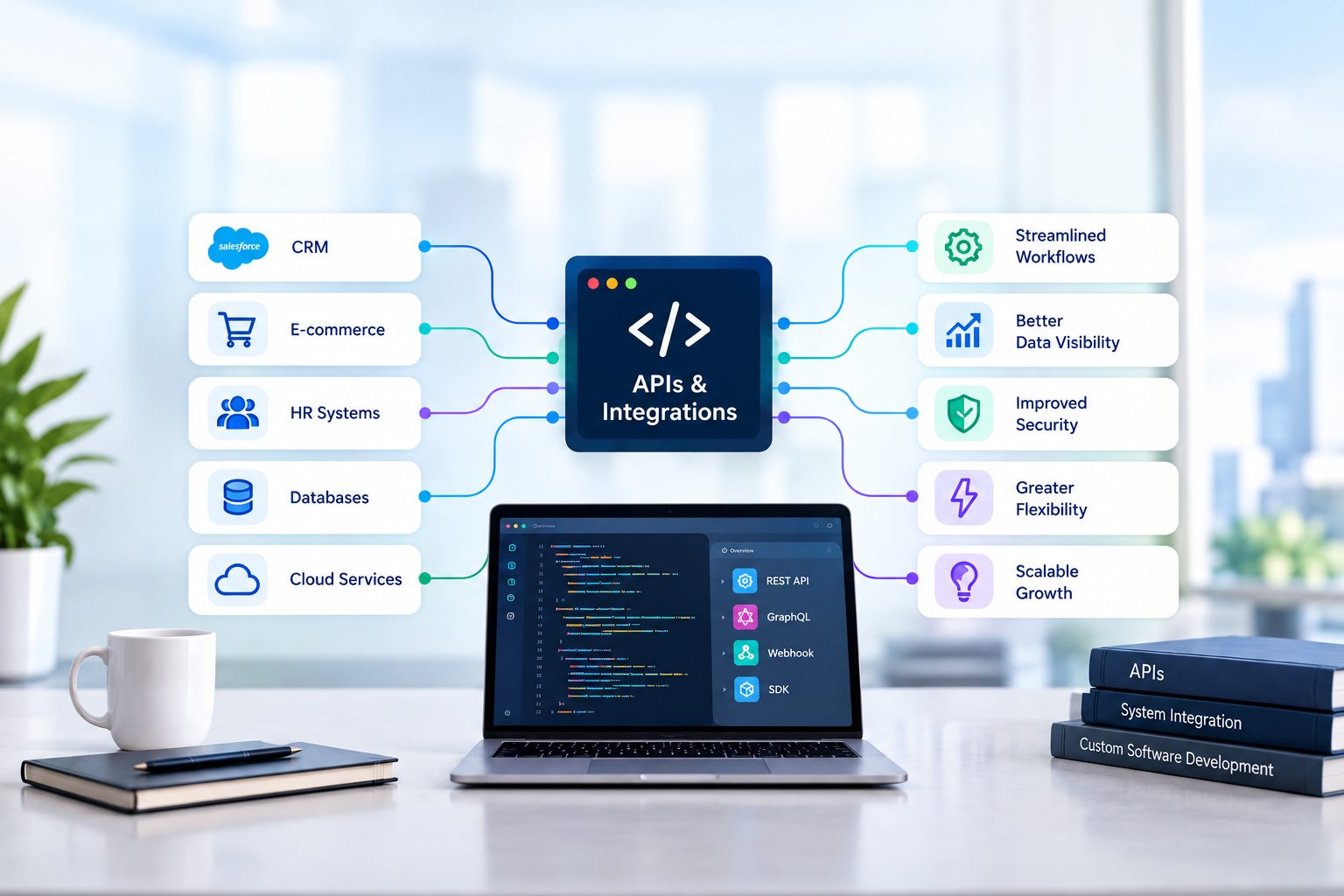
The Role of APIs and Integrations in Modern Custom Software Development
No application works alone anymore. Your CRM talks to your billing tool, your mobile app...
How Software Development Companies Help Businesses Modernize Legacy Systems
Outdated software quietly drains budgets, slows teams down, and blocks growth. Many...
Real-Time vs. Batch NetSuite Integration: Which Architecture Fits Your Workflow?
Every NetSuite project eventually hits the same question: should data move the instant...
Custom Software Development for Startups vs. Enterprises: Key Differences
Building software for a startup is very different from building it for a large enterprise....