Accelerating Business Growth through Salesforce Optimization For LastPass
This case study explores how Closeloop transformed LastPass’s fragmented and reactive Salesforce environment into a stable and scalable platform by introducing proactive governance optimized code standardized SOPs dedicated pod ownership across L2O Q2C CX and Partner workflows and stronger integrations resulting in improved system stability faster incident resolution better lead conversion and increased stakeholder confidence.
In early 2025, LastPass, a global leader in password management and digital identity security, embarked on a mission to revamp its Salesforce platform, which had become a critical operational layer connecting its global sales, partner, and customer service organizations.
Despite Salesforce being integrated into business workflows, the ecosystem had grown complex and fragmented - leading to inefficiencies, inconsistent configurations, and a lack of strategic direction.
To address these challenges, LastPass engaged Closeloop Technologies LLC in March 2025 as its new Salesforce Managed Services and Development partner. Closeloop brought a solution-oriented approach, with a focus on stabilizing the environment, enhancing scalability, and establishing long-term governance.

Project Overview
After a structured handover and Knowledge Transfer (KT) phase in March 2025, Closeloop formally assumed full responsibility for Salesforce management in April 2025. The engagement was bifurcated into two primary workstreams - Salesforce Development and Salesforce Support, both aligned under a unified Agile delivery and governance model.
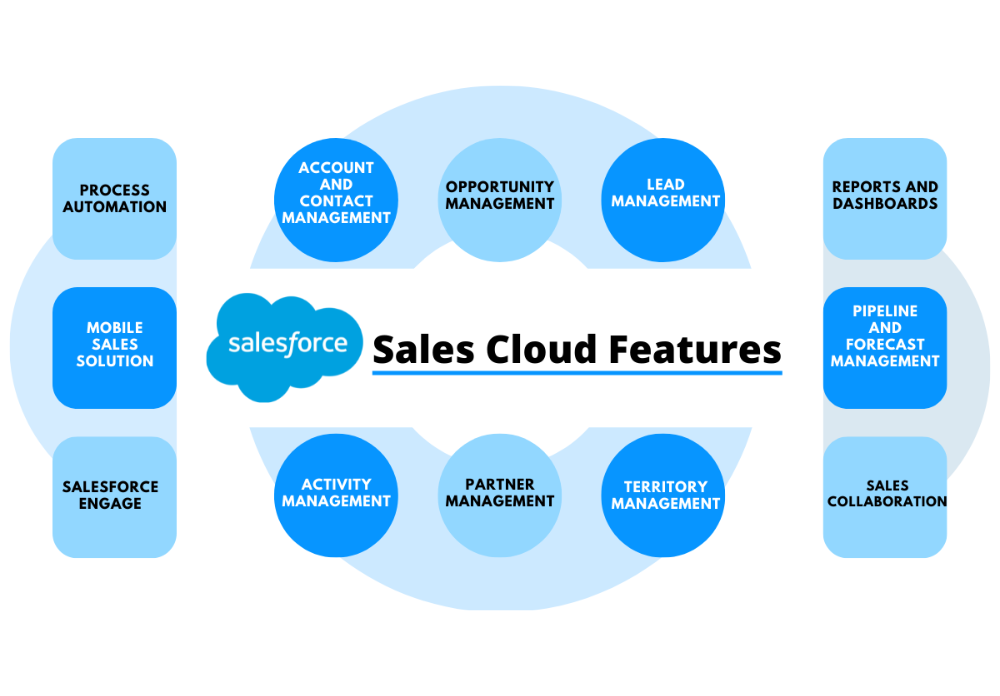
The CRM supports lead-to-opportunity conversion, quote-to-cash processes, customer case resolution, and partner program management.
With multiple integrations, including Cognism, DocuSign, Skilljar, and Impartner, the platform ensures streamlined cross-functional data flow.
Encompassing Sales Cloud, Service Cloud, Partner Management, and Salesforce CPQ, it powers end-to-end operations for LastPass worldwide.
Legacy Salesforce Limiting Operations
When Closeloop was engaged, the Salesforce environment at LastPass faced significant operational, architectural, and support-related challenges that stemmed from legacy management.
Reactive Vendor Engagement
The prior team operated as order takers, implementing requests without questioning their scalability or offering design improvements.
Repeated Governor Limit Errors
Due to unoptimized code and automation.
Lack of Governance & Documentation
No SOPs, deployment guidelines, or ownership matrix existed.
Technical Debt & Performance Bottleneck
Redundant triggers and poorly optimized flows breached Salesforce governor limits.
Fragmented Ownership
CX, Partner, L2O, and Q2C teams lacked dedicated ownership.
Weak Support and Incident Response
High-priority incidents were resolved reactively without RCA.
Two-Tier Strategy
The Salesforce engagement was restructured with a two-tier strategy: Development and Support.
A. Salesforce Development Stream
Focused on strategic enhancements, bug fixes, and optimization across four functional pillars:
Lead to Opportunity
Partner Management
Quote to Cash
Customer Experience
B. Salesforce Support Stream
A dedicated support team focused on operational excellence and proactive maintenance:
- Providing timely assistance to Salesforce users and resolving operational challenges
- SOP creation and standardization across processes
- Root Cause Analysis (RCA) for high-severity incidents
- Preventive audits and proactive system monitoring
- Release governance and deployment management
Scalable Solutions
To address the multiple challenges in the Salesforce ecosystem, Closeloop implemented a structured, proactive, and scalable solution tailored to LastPass’s operational needs:
Proactive Vendor Engagement and Strategic Guidance
We transformed the vendor engagement model from reactive order-taking to a consultative, value-driven partnership. Each request was reviewed for scalability, maintainability, and alignment with best practices, ensuring long-term system stability and efficiency.
Code Optimization and Automation Improvements
Our team conducted a comprehensive audit of Apex triggers, workflows, and automation. Redundant or unoptimized processes were refactored to prevent repeated Salesforce governor limit errors, improve runtime efficiency, and enhance platform performance.
Governance Framework and Documentation
We established standardized operating procedures (SOPs), deployment guidelines, and an ownership matrix across all teams. This framework ensured consistent development practices, streamlined deployments, and clear accountability for each functional pod (CX, Partner, L2O, Q2C).
Technical Debt Reduction and Performance Enhancement
The team systematically addressed technical debt by consolidating triggers, optimizing flows, and removing unnecessary automations. This proactive approach reduced performance bottlenecks and ensured adherence to Salesforce best practices.
Dedicated Pod Ownership and Clear Accountability
Each pod (CX, Partner, L2O, Q2C) was assigned dedicated resources with defined ownership, improving focus, reducing fragmentation, and enhancing the quality and speed of deliverables.
Enhanced Support and Incident Management
We implemented a robust incident response framework, including priority-based ticket, timely resolutions, and thorough root cause analyses (RCA) for critical issues. This shift from reactive firefighting to structured support improved system reliability and user satisfaction.
From Vision to Execution
Closeloop adopted a robust Agile methodology tailored for Salesforce programs. We divided delivery into bi-weekly sprints focusing on stability, innovation, and performance. Each sprint cycle included backlog grooming, sprint planning, QA, UAT, and demo reviews with stakeholders.
Key principles applied:
- Proactive issue prevention over reactive ticketing.
- Sprint-based prioritization aligned to business impact.
- Automated testing and CI/CD pipelines.
- Comprehensive documentation and release governance.

Unified Agile Delivery
Stability • Innovation • Performance
Salesforce Tech Stack Overview
Integrations: DocuSign, Cognism, Impartner, Cloudingo, Zoomin
Business Impact and Results
Since Closeloop’s engagement in April 2025, LastPass has witnessed measurable improvements in system performance, platform reliability, and end-user satisfaction.
Reduction in issue recurrence through proactive RCA implementation.
Faster incident resolution due to standardized SOPs and defined SLAs.
Improvement in lead conversion rate following L2O automation enhancements.
Enhanced system stability with no governor limit breaches post code optimization.
Increased user adoption and stakeholder confidence in Salesforce as critical platform.
Value Delivered
Key Achievements (First Six Months)
- Delivered 15+ feature enhancements across Sales Cloud, Service Cloud, and CPQ.
- Implemented process standardization across L2O, Partner, and CX workflows.
- Improved data synchronization between Salesforce and other third-party tools.
- Reduced governor limit breaches through optimized Apex and Flow logic.
- Introduced automated monitoring dashboards for data integrity and system uptime.
- Improved quoting cycle time through revamped CPQ logic and templates.
- Instituted RCA-driven SOPs that now serve as the foundation for future audit and compliance readiness.
Transitioned operations model successfully.
Best practices, SOPs, and preventive maintenance.
Enhanced integration and platform performance.
Improved cross-functional stakeholder confidence.
Salesforce Development Overview
The development stream was organized into four functional pods, each addressing a key business process domain.
L2O (Lead to Opportunity)
- Complete management of Accounts, Contacts, Leads, and Opportunities.
- Integration with Marketo for marketing automation and lead nurturing.
- Integration with Zoomin for content experience and knowledge sharing.
- Implementation of Cognism integration for contact enrichment.
- Development of Flywheel Contact Wizard for CRM hygiene.
- Data validation and deduplication using Cloudingo.
The L2O pod has streamlined the flow of marketing-qualified leads (MQLs) into sales-qualified opportunities, reduced duplicate data entries, and improved lead conversion tracking through structured data governance.
Q2C (Quote to Cash)
- Overhaul of Salesforce CPQ configuration for quoting accuracy.
- Enhancements in quote template design and usability.
- Multi-level approvals and discount governance.
- Automation of Renewals and Amendments (Subscription model).
- Streamlined Order Management and invoicing integration.
- Optimization of DocuSign for audit traceability.
Quote turnaround time was reduced, pricing errors minimized, and the sales team empowered with faster quote approvals and automated renewal cycles.
Partner
- Centralized Skilljar training data within Salesforce.
- Creation of a Partner Account Object for relationship insights.
- Seamless integration with Impartner for sync and attachments.
- Decommissioning strategy for legacy PRM components.
Partner performance tracking has improved significantly, and redundant PRM elements were successfully retired, reducing administrative overhead and improving partner collaboration.
CX (Customer Experience)
- Enhancement of Omnichannel routing for intelligent distribution.
- Enhancement of Email-to-Case for context capture.
- Deployment of Entitlement Management for customer tiers.
- Automation of case assignment, escalation, and SLA notifications.
- Improvement of Chat and Web-to-Case channels.
- Analytics dashboard implementation.
Average response time decreased, case backlog was reduced, CX visibility improved, and customer satisfaction metrics reached an all-time high.
Explore the complete journey from problem to results—backed by real data and insights.
Salesforce Support & Maintenance
In parallel to the development workstreams, Closeloop established a dedicated Support Team comprising three full-time Salesforce specialists.
Tiered Support Model
- Level 1: Incident triage and basic configuration issues.
- Level 2: Advanced troubleshooting and admin-level changes.
- Level 3: Technical fixes involving Apex, Flows, or integrations.
Root Cause Analysis (RCA)
Each high-priority issue triggers an RCA exercise where the team documents the cause, resolution, and preventive actions. These insights feed directly into continuous improvement sprints.
SOP Framework
- Production deployment validation
- Data cleanup routines
- User provisioning and role management
- Incident classification and escalation
Proactive Monitoring
Regular health checks using Cloudingo for deduplication. Integration monitoring dashboards provide real-time alerts on failed syncs or data anomalies.
Reporting & Governance
Weekly status reports summarize ticket volume, RCA summaries, and improvement opportunities. Monthly calls with the LastPass leadership ensure transparency, prioritization alignment, and strategic roadmap adjustments.
Key Outcome
The support function transitioned Salesforce from a reactive maintenance model to a predictive and preventive operations framework.
Client Value & Feedback
Client feedback reflects not just satisfaction with technical execution but appreciation for the strategic partnership and business outcomes achieved.
"Working with the Closeloop team on our Salesforce optimization was a game changer. They took the time to understand our business processes and re-engineered Salesforce to align perfectly with our growth goals. As a result, we’ve seen improved visibility, streamlined workflows, and a significant boost in team productivity. Their expertise and execution truly helped accelerate our business growth."
Senior Manager, Enterprise SystemsFrequently Asked Questions
No questions match your search.
Reporting problems in Salesforce are almost always a symptom of underlying data and configuration issues — dirty data produces inaccurate dashboards, which erodes leadership trust in the platform. Optimization addresses the root causes: standardizing picklist values, enforcing required fields at key pipeline stages, fixing broken report filters, and redesigning dashboards to surface the KPIs that leadership actually needs for decision-making. Closeloop Technologies builds executive and operational dashboards as part of every Salesforce optimization engagement — ensuring that when the platform is clean, the reporting layer immediately reflects that improvement in real-time business intelligence.
Over-built or conflicting automation in Salesforce causes missed tasks, duplicate notifications, incorrect field updates, and approval bottlenecks — all of which create frustration and workarounds that erode platform adoption. Optimizing automation means consolidating redundant flows, rewriting inefficient triggers, and redesigning approval processes to match how the business actually operates today rather than how it operated when the rules were first written. Closeloop Technologies rebuilds automation logic with a clean-slate approach — auditing every active rule, eliminating conflicts, and ensuring each automation serves a clear and measurable business purpose before it goes back into production.
Data cleanup in a live Salesforce org requires a careful sequencing strategy — starting with deduplication of account and contact records, then standardizing field values, then archiving obsolete records — all without locking sales teams out or corrupting active opportunities. Automated deduplication tools, data validation rules, and temporary sandboxing of risky changes are all part of the approach. Closeloop Technologies performs all data remediation work in staging environments first, validates the outcome against production data, and deploys changes in low-impact windows — ensuring sales teams experience improvement, not disruption, throughout the optimization process.
A thorough Salesforce org audit reviews every layer of the platform: data model integrity (duplicate records, orphaned objects, unused fields), automation coverage (redundant flows, conflicting triggers, unused workflow rules), security and permission sets (over-provisioned access, inactive users), integration health (broken API connections, stale sync logs), and reporting accuracy (dashboard data vs. actual pipeline). The audit output should be a prioritized remediation plan that distinguishes quick wins from structural changes. Closeloop Technologies conducts this audit as the first phase of every Salesforce optimization engagement, ensuring the work that follows is targeted, justified, and sequenced for maximum impact.
When Salesforce is optimized — with clean data, reliable automation, accurate reporting, and a frictionless user experience — sales teams spend more time selling and less time fighting the platform. Forecasting becomes trustworthy, so leadership can make better resource allocation decisions. Marketing attribution improves, so campaign spend is directed toward the highest-converting channels. And onboarding new reps becomes faster because the system guides them through well-defined processes. Closeloop Technologies delivers these business outcomes by treating Salesforce optimization not as a technical cleanup exercise but as a revenue operations transformation — aligning every platform change to a measurable business impact.
CRM governance is a set of policies, standards, and processes that define how Salesforce is configured, maintained, and evolved over time. It covers naming conventions, field usage policies, approval processes for new customizations, data quality standards, and change management procedures. Without governance, every team adds their own fields, workflows, and reports — creating an org that no one fully understands and that becomes increasingly risky to modify. Closeloop Technologies implements governance frameworks as a core deliverable in Salesforce optimization engagements, giving clients a structured foundation that prevents the same technical debt from re-accumulating after the platform is cleaned up.
Technical debt in Salesforce builds up when teams add quick fixes, unused fields, redundant automation rules, and overlapping workflows without a governance framework to manage them. Over time, the org becomes harder to maintain, slower to load, and unreliable for reporting. Common signs include duplicate records corrupting pipeline data, automation firing unexpectedly, reports that don't match expected results, and sales reps avoiding the platform because it's too cumbersome to use. Closeloop Technologies identifies and resolves all of these issues through a comprehensive org audit — mapping every customization against current business requirements and eliminating what no longer serves the business.
Salesforce optimization goes beyond the initial implementation — it involves auditing the existing org for technical debt, removing unused customizations, restructuring data models, streamlining automation flows, and realigning the platform with current business goals. For a growing SaaS company, an unoptimized Salesforce org accumulates bloated workflows, inconsistent data, and slow page performance over time, directly degrading sales team productivity and leadership visibility. Closeloop Technologies approaches Salesforce optimization as a structured, phase-by-phase engagement — first understanding the business objectives, then systematically resolving the technical and process gaps that are holding the platform back.