Establishing A Robust QA Process For Lastpass
This case study explores how Closeloop established a robust QA process for LastPass to improve product quality and release reliability by introducing standardized testing frameworks automated validation structured QA workflows and continuous feedback loops overcoming fragmented processes and inconsistent quality checks to deliver faster releases reduced defects improved system stability and stronger confidence in product performance.
LastPass began without any dedicated QA resources. Testing responsibilities fell to the Product Owner and various stakeholders, resulting in ad-hoc validation, limited ticket details, and inconsistent verification across features. Without structured QA, releases often introduced regressions that required post-deployment fixes and undermined stakeholder confidence.
Initially, the product team relied on informal checks rather than a formal QA process. Acceptance criteria were often incomplete, and there were no standardized test cases or regression suites to protect existing functionality.
These post-release issues not only required urgent fixes but also disrupted development timelines and reduced overall team efficiency. Over time, the absence of a robust QA framework began to erode stakeholder confidence, as product stability and reliability became unpredictable. This highlighted the critical need for establishing a dedicated QA function, implementing structured testing processes, and introducing automation to improve product quality and release confidence.
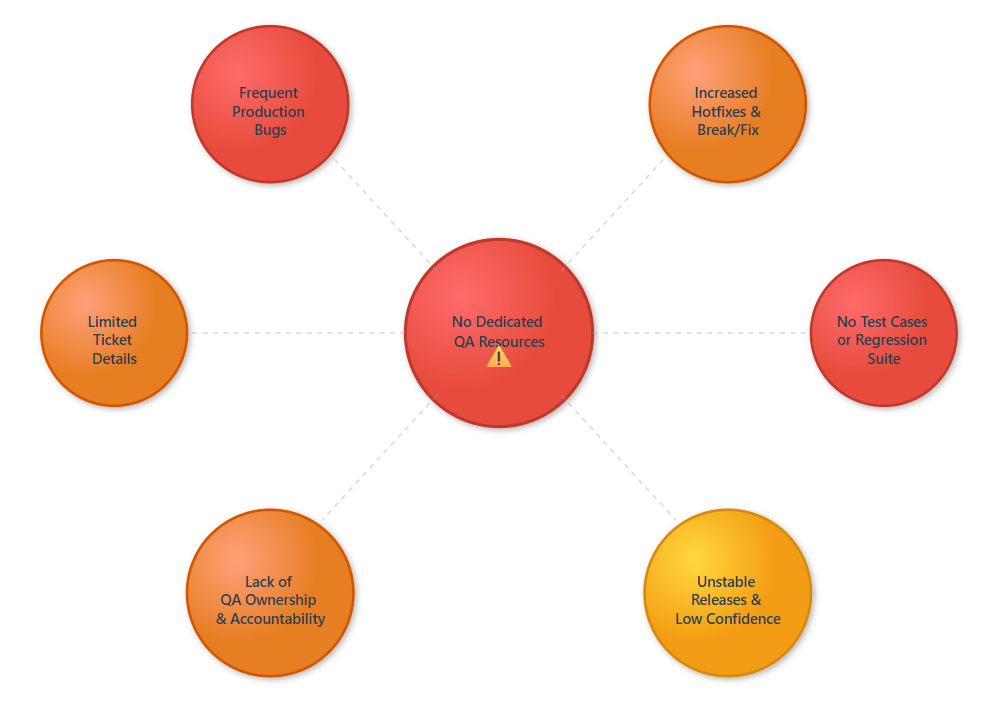
Lack of Structured QA Led to Release Instability
Because there was no dedicated QA ownership, the delivery process experienced repeated instability—frequent production issues, rushed hotfixes, and limited visibility into ticket quality and readiness.
Frequent Production Bugs
Unstructured, ad-hoc testing allowed defects to escape into production, increasing incident rates and impacting user trust.
Repeated Hotfix Releases
Releases often required immediate break/fix cycles post-deployment, disrupting roadmap execution and creating reactive development patterns.
Sparse Ticket Details
Acceptance criteria lacked clarity and persona context, creating ambiguity for developers and testers.
No Regression Coverage
Without a regression suite, new features frequently impacted existing functionality, reducing release stability.
Implementing a QA-First Delivery Model
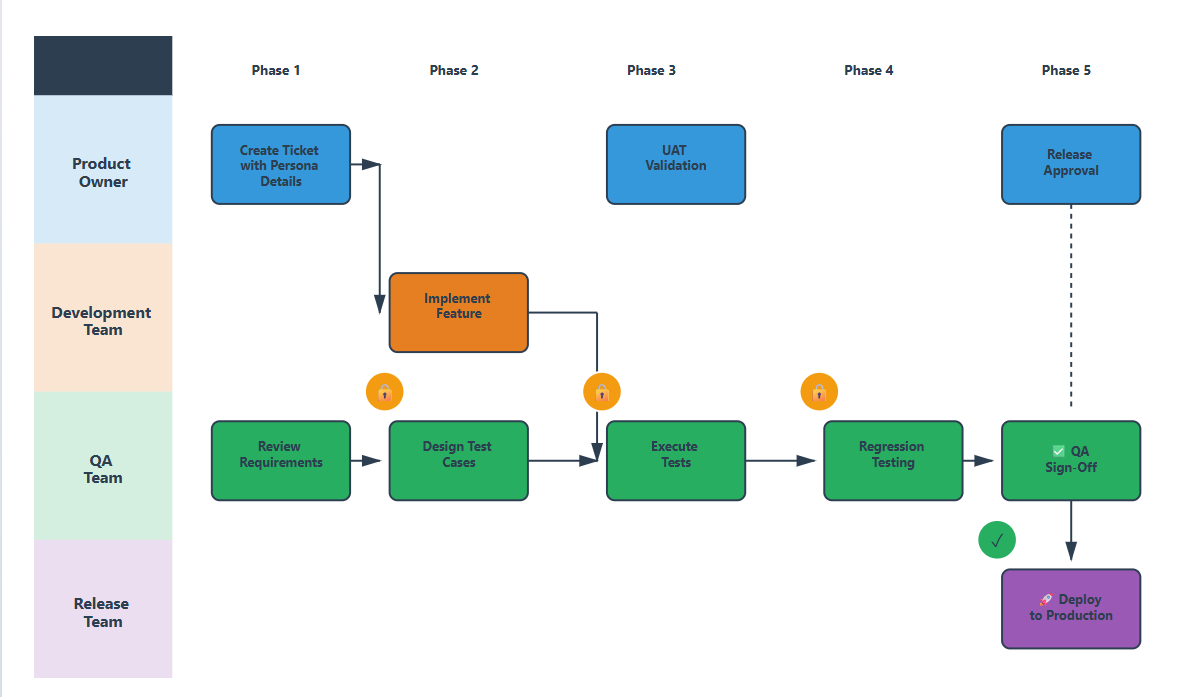
Closeloop formed a dedicated QA team and implemented a structured QA-first workflow to stabilize releases and introduce measurable quality controls. Quality validation became mandatory across every stage of development.
Structured Ticketing & Test Design
- Persona-based ticket creation
- Clear and testable acceptance criteria
- Comprehensive manual test cases
- Regression suite development
Embedded QA Across SDLC
- QA participation in grooming & sprint planning
- Mandatory QA validation for every ticket
- Defect tracking with Root Cause Analysis (RCA)
- QA sign-off required before release
Story Grooming
Requirements refined with persona context and clear acceptance criteria to eliminate ambiguity early in the cycle.
Test Case Design
Detailed test scenarios created during planning to ensure complete coverage before development begins.
QA Validation
Every ticket validated through structured manual and automated testing before progressing toward release.
UAT & Release Gates
User Acceptance Testing and mandatory QA sign-off enforced release readiness and minimized production regressions.
QA Architecture
Tech Stack
Closeloop implemented a focused technology ecosystem to support structured test management, defect tracking, automation, and CI/CD-driven validation.
 Selenium
 JIRA
JIRA
 CI/CD Pipelines
 Test Rail
Measurable Improvements Across Delivery
Over a 4-month tracking period, the QA-first transformation delivered quantifiable improvements in release stability, process discipline, cross-team collaboration, and stakeholder confidence.
Faster Regression Testing
Automation reduced the time required to execute regression test suites.
Improved Test Coverage
Automated and structured testing expanded validation across critical product features.
Faster Release Validation
Streamlined QA workflows improved release readiness and reduced deployment risk.
Insights That Shaped the QA Strategy
Closeloop conducted interviews with product owners, stakeholders, and developers to uncover recurring quality gaps and release instability drivers.
Stakeholder Interviews & Observations
We interviewed product owners, stakeholders, and developers to uncover recurring quality issues and expectations for release stability. These conversations identified friction points in handoffs, unclear acceptance criteria, and priorities for real-user journeys that guided our testing strategy.
Insights from the interviews were synthesized into persona-based requirements and realistic test scenarios.
Key Insights & Strategic Shifts
- Stability and reliability were top priorities
- Clearer requirements through persona-based tickets
- Test scenarios mapped to real workflows and user journeys
- Prioritized regression coverage to protect critical paths
Explore the complete journey from problem to results—backed by real data and insights.

Client Value & Feedback
Client feedback reflects not just satisfaction with technical execution but appreciation for the strategic partnership and business outcomes achieved.
"After Closeloop implemented a dedicated QA team and structured testing gates, our release cadence became much more reliable. Production incidents dropped considerably, and we now have greater assurance that builds are stable before they reach users."
Megha Chauhan, Sr Director of EngineeringFrequently Asked Questions
No questions match your search.
By identifying defects earlier and validating functionality thoroughly, QA processes minimize production issues. Closeloop Technologies ensures high-quality releases that enhance user satisfaction.
QA processes typically involve test management tools, automation frameworks, CI/CD pipelines, and bug tracking systems. Closeloop Technologies leverages modern tools to ensure efficient and scalable testing.
The timeline depends on the current maturity level and system complexity. Closeloop Technologies follows a phased approach to implement QA processes without disrupting ongoing development.
Test automation speeds up testing cycles, improves accuracy, and enables continuous integration. Closeloop Technologies integrates automation into development pipelines to enhance efficiency and reduce manual effort.
Transitioning requires process standardization, documentation, and tool implementation. Closeloop Technologies helps organizations move from informal testing practices to scalable QA systems.
An effective strategy includes manual testing, automated testing, regression testing, and performance validation. Closeloop Technologies combines these approaches to deliver comprehensive quality assurance.
A structured QA process identifies defects early, reduces regressions, and ensures stable releases. Closeloop Technologies implements end-to-end testing strategies that significantly improve release confidence.
Businesses should focus on defining clear testing workflows, establishing quality benchmarks, and implementing test management tools. Closeloop Technologies helps organizations build structured QA frameworks that ensure consistent product quality.