Revolutionizing Lighting Control with Bluetooth Technology
This case study explores how Closeloop developed the Xicato XIMtroller iOS application to simplify control of Bluetooth-enabled lighting systems by addressing complex device integration connectivity and security challenges through optimized communication and stable performance resulting in reliable provisioning enhanced security and a seamless scalable lighting control experience.
Xicato is a leading innovator in intelligent LED lighting solutions, catering to a wide range of industries including art galleries, museums, and theaters. Their Bluetooth and Wi-Fi enabled XIM LED lights have redefined lighting control, offering the ability to create and manage mood lighting in diverse environments.
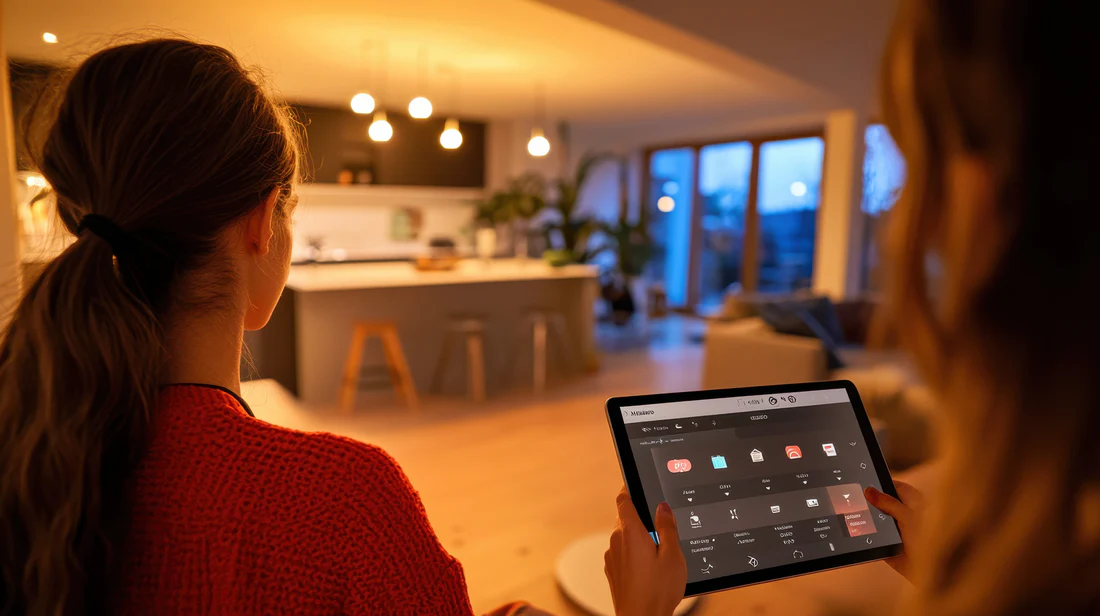
The XIMtroller application was developed to provide artists, lighting designers, and facility managers with unprecedented control over XIM LED lights — allowing them to set brightness levels, create schedules, and configure lights for various settings from a single iOS interface.
Closeloop's DevOps and iOS engineering team collaborated closely with Xicato to analyze Bluetooth communication failures, refine device protocols, implement public-private key encryption, and deliver a stable, production-ready iOS application.
Unreliable Communication in IoT Systems
Building the XIMtroller application required overcoming a series of complex hardware-software integration challenges unique to Bluetooth-enabled IoT lighting environments.
Hardware-Software Interface
One of the primary challenges was interfacing between iOS devices and XIM Bluetooth-enabled lights. The team encountered significant difficulties in establishing reliable and concurrent communication with multiple XIM lights for provisioning and commissioning purposes.
Bluetooth & WiFi Connectivity
The CoreBluetooth framework available for iOS devices presented intermittent Bluetooth connection termination issues, leading to disruptions in communication with the XIM lights. These issues had to be resolved to ensure a stable and seamless connection between the app and the lights.
Security Concerns
Securing communication with XIM lights — particularly when connecting to secured networks — raised significant security concerns. The team developed and implemented a specific encryption protocol based on the public-private key encryption paradigm to address these challenges.
Secure IoT Communication Platform
The XIMtroller project was built around six core objectives that guided the development approach from architecture to delivery.
Intuitive Control
Developed a user-friendly iOS application that allows artists and lighting professionals to easily control Xicato's Bluetooth-enabled XIM LED lights with minimal learning curve.
Grouping & Zoning
Implemented features that enable users to group and zone lights based on their location or function — such as hallways, stages, and aisles — for contextual scene management.
Brightness Control
Enabled precise control of individual lights, groups of lights, or all lights simultaneously — allowing users to create dynamic, customized lighting effects for any setting.
Configuration & Monitoring
Provided users with the ability to query individual XIM modules for configuration information and real-time operating data, enabling proactive monitoring and management.
Bluetooth & WiFi Connectivity
Established stable Bluetooth and Wi-Fi connections with XIM modules to ensure seamless, uninterrupted communication between the iOS application and the lighting hardware.
Security
Implemented robust public-private key encryption protocols to secure all communications with XIM lights — especially for devices on secured enterprise networks requiring elevated security standards.
Engagement at a Glance
Tech Stack
 Swift
Swift
 iOS
iOS
Results & Benefits
Despite the complexity of the hardware-software integration, the project successfully delivered measurable improvements across connectivity, security, and operational reliability.
Stable Bluetooth Connectivity
The enhanced communication layer significantly minimized connection drops caused by CoreBluetooth framework instability, enabling reliable interaction with multiple XIM light fixtures simultaneously.
Secure Device Communication
Public-private key encryption mechanisms ensured fully protected command transmission between the iOS app and XIM lights, meeting the security requirements of both public and enterprise networks.
Reliable Lighting Provisioning
Improved device commissioning and configuration workflows enabled successful provisioning of XIM lighting fixtures across diverse deployment environments, reducing setup time and operational friction.
Impact on the Organization
The challenges encountered during the project had several notable impacts — shaping both the technical architecture and the team's delivery approach.
Provisioning & Commissioning
The initial challenge of provisioning and commissioning XIM devices was resolved for public network deployments, expanding the scope of environments where the XIMtroller application could operate effectively.
Security Implementation
The need for enhanced security protocols added architectural complexity to the project. The team implemented a specialized public-private key encryption scheme that secured all XIM light communications on both open and enterprise networks.
Development Agility
The project team maintained a high level of development agility to address Bluetooth connectivity and hardware-software interface issues promptly — iterating rapidly on communication protocols to achieve stability in real deployment scenarios.
Explore the complete journey from problem to results—backed by real data and insights.

Client Value & Feedback
Client feedback reflects not just satisfaction with technical execution but appreciation for the team's ability to navigate complex IoT challenges and deliver a production-ready solution.
"The XIMtroller application has transformed how our clients interact with XIM lighting systems. Closeloop's ability to resolve the CoreBluetooth connectivity challenges and implement a secure encryption layer was exceptional — delivering exactly the robust, reliable iOS solution we envisioned."
Frequently Asked Questions
No questions match your search.
IoT apps are often deployed on a fixed device fleet where OS version upgrades may lag, meaning the app must be tested across a wide range of iOS versions and hardware generations. CoreBluetooth behaviour also varies subtly between iOS releases, making regression testing of BLE flows critical after any OS update. Closeloop Technologies implemented a rigorous hardware-in-the-loop testing approach that validated Bluetooth connectivity, command delivery, and encryption behaviour across multiple iOS versions and device models, ensuring the platform operated consistently in the field regardless of the iOS version running on the controlling device.
Businesses can achieve improved device control, better user experience, increased operational efficiency, and enhanced product value. Closeloop Technologies delivers measurable improvements through tailored IoT solutions.
Automation enables scheduling, remote control, and intelligent responses based on user behavior or environmental conditions. Closeloop Technologies builds automation features that enhance efficiency and user convenience.
Yes, IoT platforms can integrate with CRMs, cloud services, and third-party APIs. Closeloop Technologies ensures seamless integration to create a unified and connected ecosystem.
IoT platforms typically use cloud infrastructure, mobile frameworks, APIs, and communication protocols like BLE or Wi-Fi. Closeloop Technologies leverages modern technologies to ensure real-time performance and reliability.
The cost depends on hardware integration, communication protocols, app features, and scalability requirements. Closeloop Technologies provides tailored solutions based on the complexity and goals of the project.
A smart control platform allows users to manage connected devices through web or mobile interfaces using real-time communication protocols. Closeloop Technologies builds such platforms to provide seamless control, monitoring, and automation.
Common challenges include device connectivity issues, real-time data processing, scalability limitations, and complex user interfaces. Closeloop Technologies addresses these by designing robust architectures and intuitive user experiences.
Businesses should look for expertise in IoT architecture, mobile app development, and real-time device communication. Closeloop Technologies stands out by delivering scalable and reliable IoT platforms that seamlessly connect hardware and software.