Digitizing Proof of Delivery for GSC
This case study explores how Closeloop digitized Grocery Supply Company’s paper-based proof of delivery process by building a custom offline-first Android application that mirrored legacy workflows supported drivers and helpers captured exceptions in real time and integrated seamlessly with backend systems resulting in faster delivery reconciliation reduced accounting errors zero paper usage and improved operational visibility across logistics and finance.
Grocery Supply Company (GSC) is a Texas- based wholesale distributor with a legacy of over 70 years in serving convenience stores across the United States. As a full-line distributor, GSC offers a comprehensive range of products, including food, beverages, tobacco, and general merchandise.
Their operations span multiple states,supported by a fleet of internal drivers and a logistics network built on precision, reliability, and customer service. GSC’s mission is to empower retailers with timely, accurate, and comprehensive supply solutions. Their business thrives on operational excellence, and their delivery model is a critical pillar of that promise.
With a strong emphasis on service quality and accountability, GSC has built long- standing relationships with thousands of retailers.
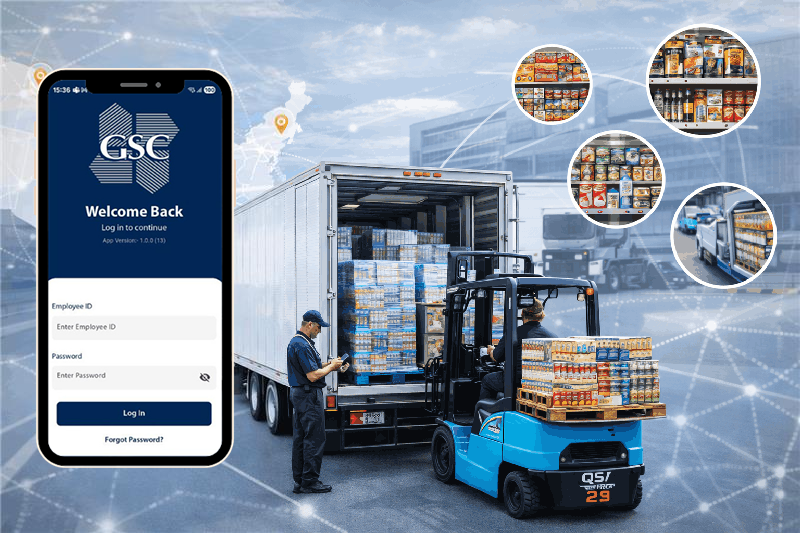
Paper Systems Constraining Delivery
GSC’s delivery operations were anchored in a paper-based proof-of-delivery (PoD) system. While this legacy approach had served them for over seven decades, it was increasingly becoming a bottleneck in their otherwise streamlined supply chain.
Manual Documentation
Drivers recorded deliveries, exceptions, and pickups on paper forms. These were prone to errors, omissions, and illegibility.
Lack of Real-Time Visibility
If you explain your goal, it will be easier to achieve the vision. A variety of important challenges and concerns explain the mission.
Delayed Reconciliation
Accounting teams had to interpret scribbled notes to reconcile deliveries with invoices, often taking days.
Inconsistent Exception Handling
Overages, shortages, damages, and returns were inconsistently documented, leading to disputes and inefficiencies.
Operational Overhead
Paper forms had to be printed, distributed, collected, and stored — adding cost and complexity.
Our research engaged frontline and back-office stakeholders to understand end-to-end delivery operations, revealing critical edge cases and workflow evolutions that shaped a practical, user-centered design.
Drivers needed large touch targets and minimal typing.
Some deliveries were logged by helpers, requiring exible input.
Drivers often picked up expired items and cardboard trash—tasks not reflected in the original documentation.
The forms usage had evolved organically, and replicating their logic was essential for adoption.
- Drivers to understand daily routines, pain points, and edge cases
- Helpers to map team-based delivery flows
- Accounting staff to trace reconciliation challenges
- Operations managers to align with understanding edge cases
Scalable Solutions
We explored several commercial PoD platforms and logistics apps. However, through early whiteboarding sessions and stakeholder interviews, it became clear that GSC’s delivery process was highly specialized, with nuances that generic platforms couldn’t accommodate.
Collaboration
Helper involvement, where multiple team members contribute to a single delivery log.
Cleanup
Pickup tasks like expired items and cardboard trash, which are rarely supported in standard PoD tools.
Offline
Offline operability, essential for routes with poor connectivity
Glove-Friendly
Support glove-friendly interaction, with large touch targets and minimal typing, tailored for blue-collar ergonomics.
Exceptions
Exception handling for overages, shortages, and damages, requiring structured capture and reconciliation.
Enterprise
No public-facing features, since the app was for internal use only on company-issued devices.
Key Features
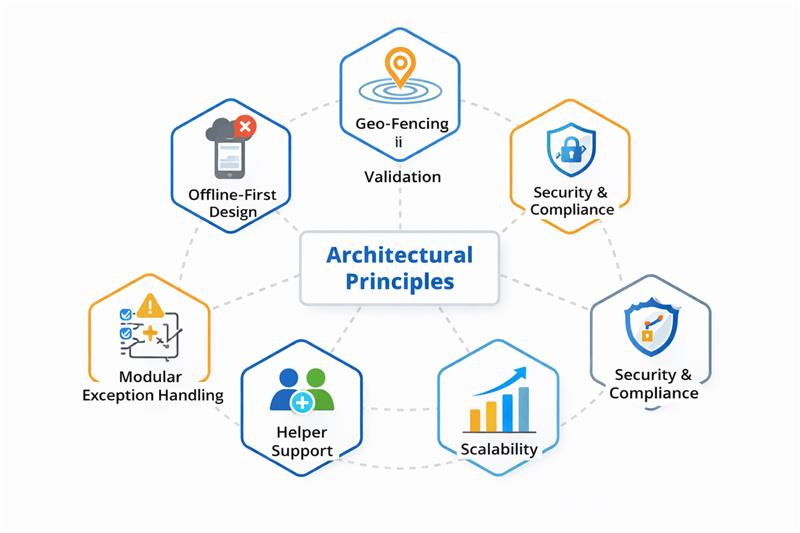
This architecture reflects Closeloop’s commitment to building resilient, user-centric, and scalable solutions that honor the operational realities of GSC’s delivery business.
Key principles applied:
- Offline-First Design
- Geo-Fencing Validation
- Modular Exception Handling
- Helper Support
- Security & Compliance
- Scalability
Technical Architecture
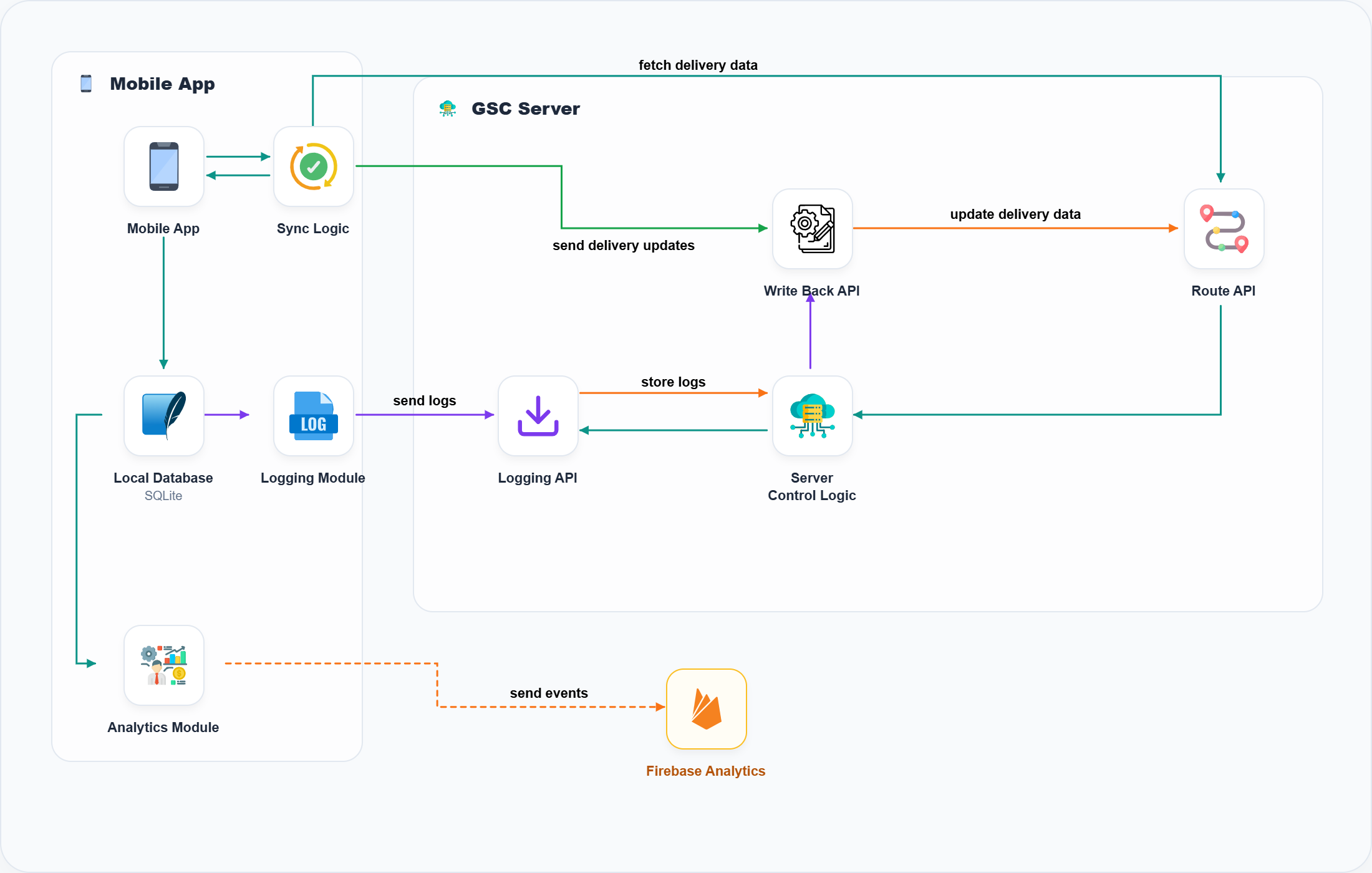
Tech Stack
 Kotlin
 SQLite
 Node / Express JS
 PostgreSQL
 AWS Cloud
 JWT
JWT
Value Delivered & Business Impact
Closeloop delivered far more than a mobile app — we delivered a strategic transformation rooted in empathy, operational insight, and technical excellence.
- Business Immersion, Not Just Requirements Gathering.
- Empathy-Driven Design for Blue-Collar Usability.
- Digitization of Tribal Knowledge.
- Operational Streamlining Across Departments.
- Iterative Collaboration and Co-Creation.
- Scalable Foundation for Future Innovation.
Portfolio
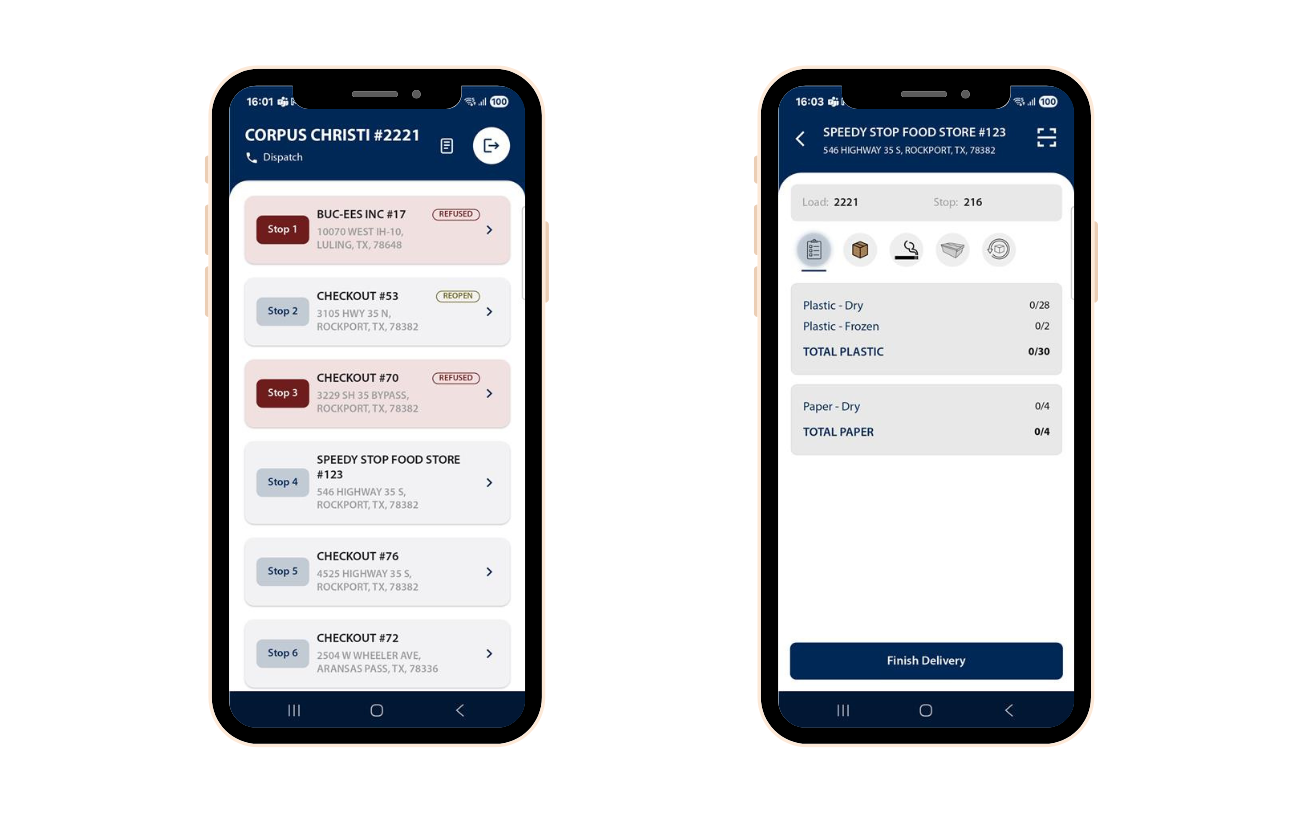
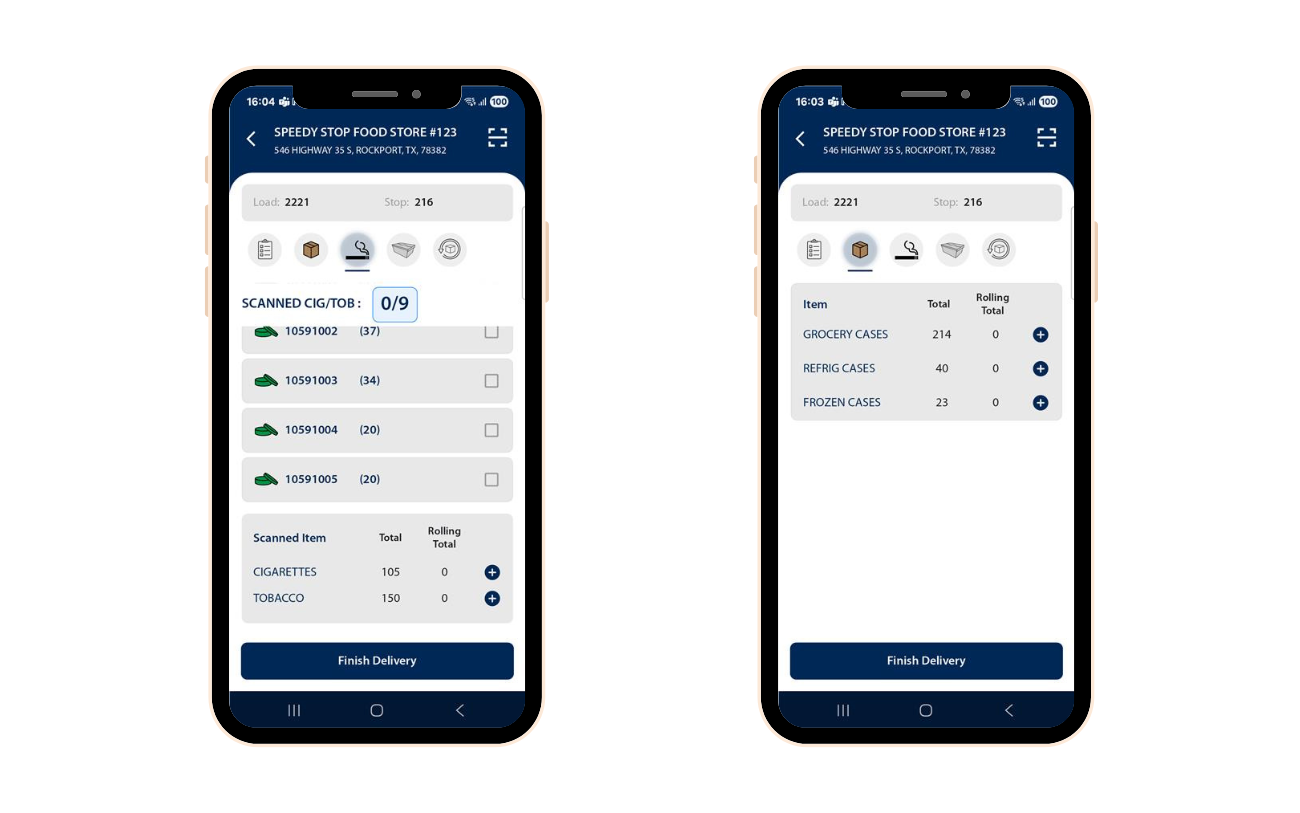
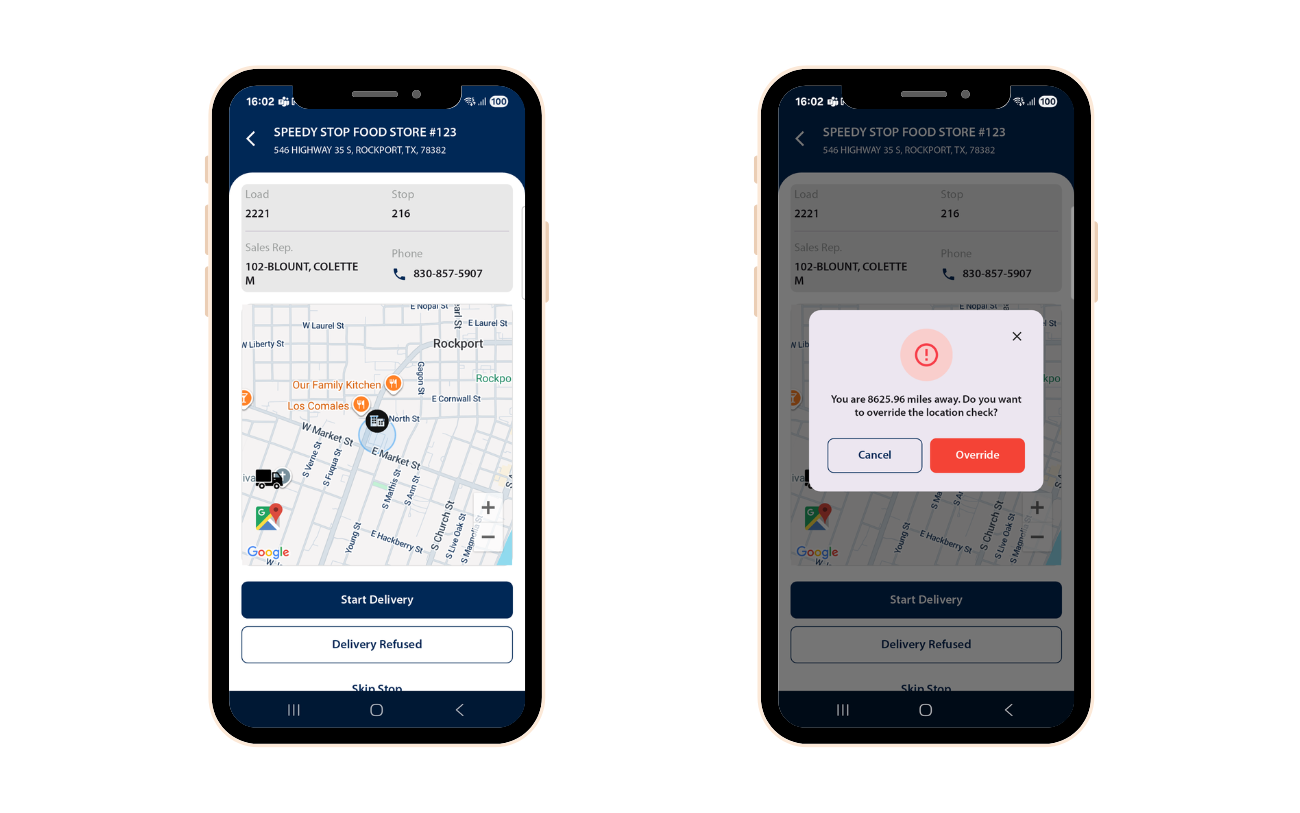
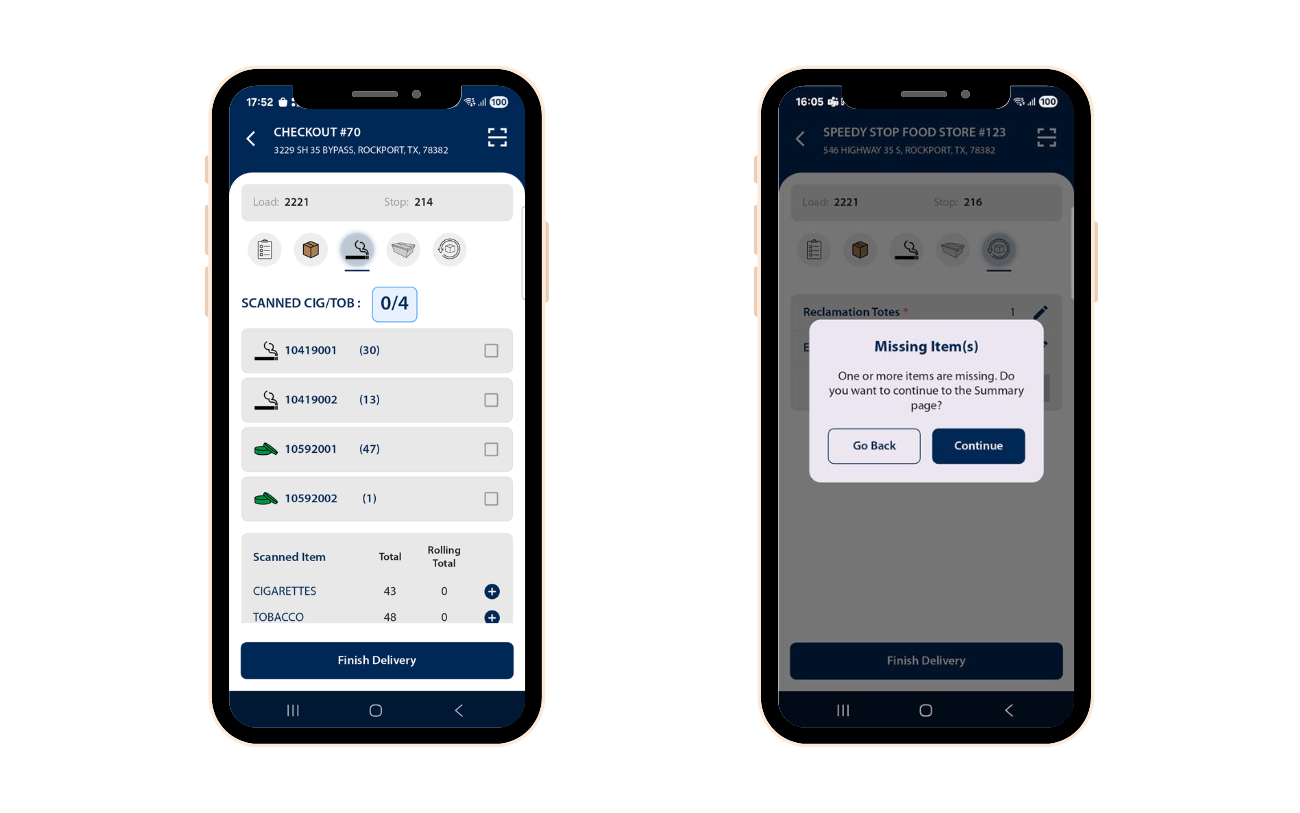
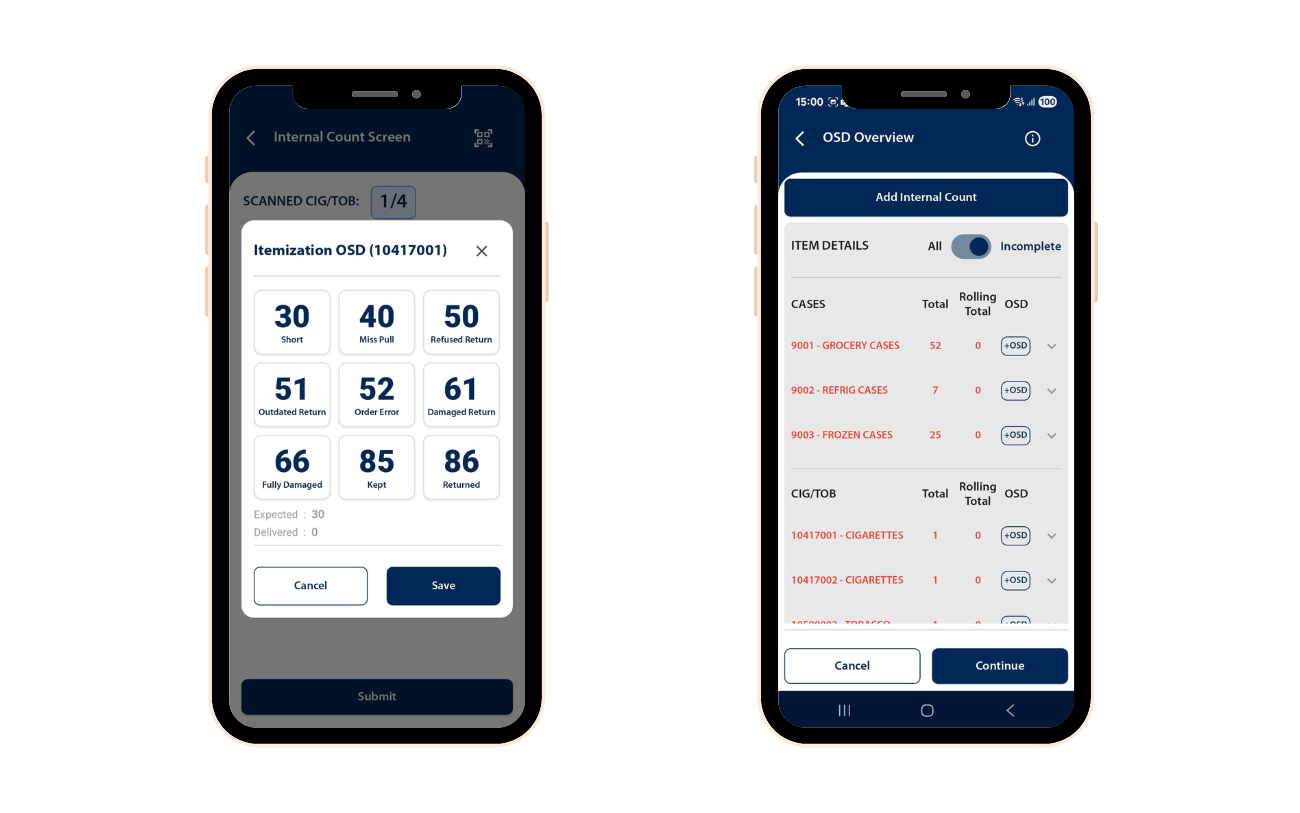
These screenshots highlight how the GSC proof-of-delivery mobile app brings the key workflows to life, showing an offline-first, driver-friendly experience that captures exceptions, supports helpers, and keeps deliveries secure and scalable.
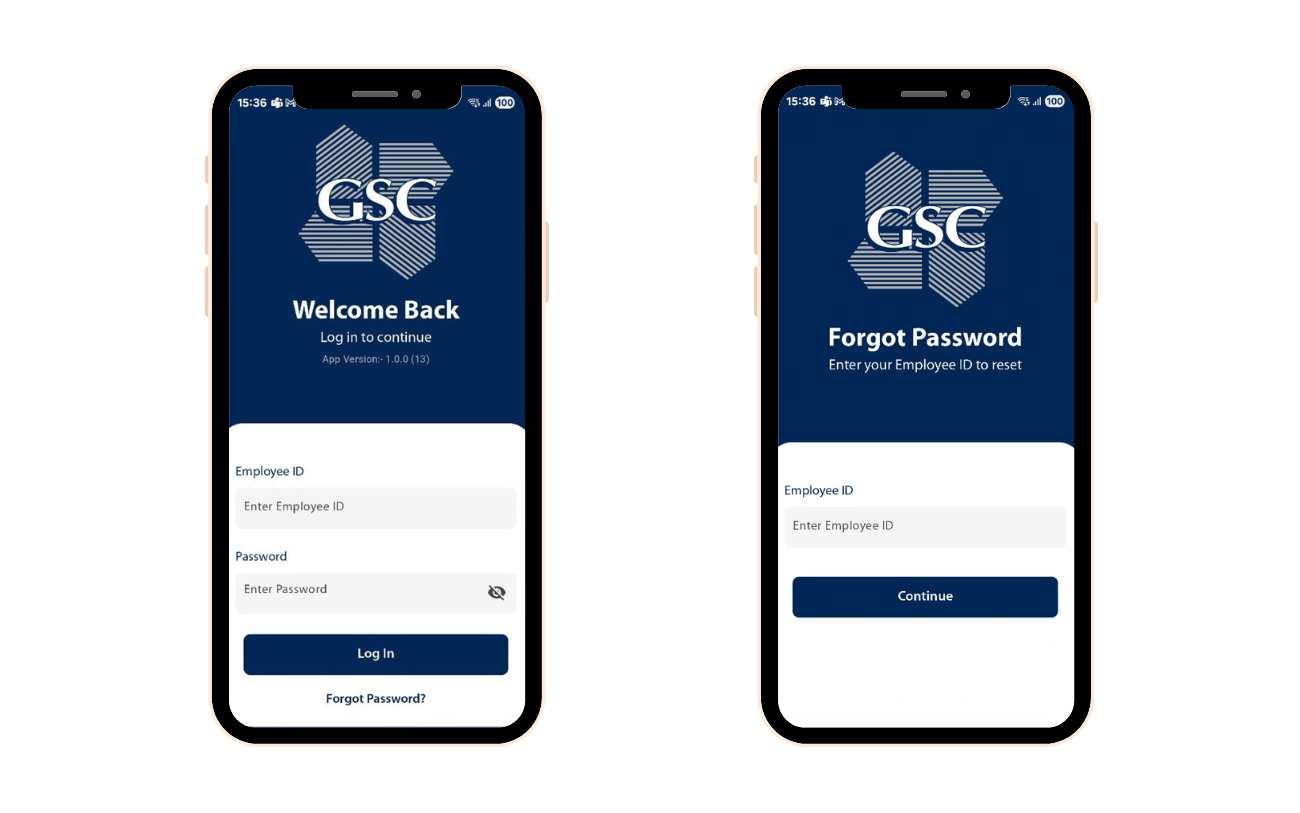
Explore the complete journey from problem to results—backed by real data and insights.

Client Value & Feedback
Client feedback reflects not just satisfaction with technical execution but appreciation for the strategic partnership and business outcomes achieved.
"The scope of work was to develop a proof of delivery Android app for our delivery drivers. Our delivery process is unique. Therefore, we needed a custom software solution. Our deliverables are the app itself along with underlying code. What we found most impressive was how they immersed themselves in our business to learn its nuances. This turned out to be crucial in developing the software we needed."
— CIO, GSC Enterprises, IncFrequently Asked Questions
No questions match your search.
A custom delivery management system helps track deliveries, manage inventory, and capture digital proof of delivery. Closeloop Technologies builds tailored mobile solutions that streamline delivery operations and improve accountability.
The cost depends on features like offline functionality, route optimization, integrations, and scalability requirements. Closeloop Technologies provides flexible pricing based on business needs and complexity.
Development timelines vary depending on project scope and features, typically ranging from a few months to mid-term implementations. Closeloop Technologies follows an agile approach to ensure timely delivery and continuous improvements.
Modern solutions use mobile frameworks, cloud infrastructure, API integrations, and offline capabilities. Closeloop Technologies leverages advanced technologies to ensure reliability even in low-connectivity environments.
Yes, modern applications can include offline functionality that syncs data once connectivity is restored. Closeloop Technologies implements offline-first solutions to ensure uninterrupted operations in remote delivery areas.
Automation reduces manual effort, eliminates errors, speeds up delivery workflows, and provides real-time tracking. Closeloop Technologies implements intelligent workflows that significantly enhance operational efficiency.
Businesses can achieve faster delivery processing, improved accuracy, and complete elimination of manual paperwork. Closeloop Technologies helped achieve 30% faster processing and 100% accuracy in inventory tracking through automation.
Scalable solutions use cloud-based architecture, modular design, and real-time data processing to support growth. Closeloop Technologies builds systems that adapt to increasing delivery volumes and operational complexity.
The most important quality in a development partner for logistics or field operations digitisation is the willingness and methodology to immerse themselves deeply in your existing operations before designing any solution, because field operations carry decades of embedded workflow logic that only becomes visible through direct observation of frontline staff. Look for a partner with experience building offline-first mobile applications, a track record of designing for physically demanding user environments, and a structured research phase that maps existing workflows before any technical architecture is defined. Closeloop Technologies is a Silicon Valley-headquartered custom software development company in the USA that brings all of these capabilities — having built a custom proof of delivery platform for a wholesale distributor with 70+ years of operating history that achieved 85% faster reconciliation, a 90% reduction in accounting errors, and complete elimination of paper across a multi-state driver fleet. The client's CIO captured the differentiator precisely: "What we found most impressive was how they immersed themselves in our business to learn its nuances — this turned out to be crucial in developing the software we needed.