Centralized, AI-Enabled Logistics Platform Development
This case study explores how Closeloop transformed D2D Global’s spreadsheet-driven and fragmented logistics operations into a centralized AI-enabled platform by automating quoting route planning trip tracking and compliance workflows resulting in faster planning cycles improved cost accuracy reduced manual effort enhanced visibility and a scalable foundation for data-driven logistics operations.
D2D Global is a North American haul-away logistics operator specializing in transporting finished vehicles from ports and yards to dealerships.
The company operates a fleet of 20+ car carriers across multiple states, managing end-to-end vehicle movements for OEMs and dealers.
Despite its strong market presence, D2D's internal systems had not kept pace with operational complexity. Critical processes such as quoting, route planning, and cost tracking were managed using Excel spreadsheets, emails, and disconnected tools — creating inefficiencies, margin leaks, and limited scalability.
What D2D Wanted to Achieve
D2D Global partnered with Closeloop Technologies to modernize its haul-away operations through a centralized, cloud-based logistics management platform with the following objectives.
Centralization & Automation
Replace spreadsheet-based workflows with a unified digital system.
Operational Efficiency
Reduce quoting, planning, and dispatch cycle times using rule-based automation.
Cost Accuracy & Margin Control
Enable real-time cost modeling tied to live variables like fuel, labor, and tolls.
Data-Driven Decisions
Empower leadership with analytics and actionable insights.
Compliance & Audit Readiness
Embed OEM and BEV (Battery Electric Vehicle) handling standards within workflows.
Scalability & Extensibility
Build a modular platform ready for AI, IoT, and telematics integrations.
Customer Confidence
Deliver transparency and traceability in quotes, deliveries, and compliance.
Systemic Limitations Before Modernization
Before modernization, D2D faced several systemic challenges limiting performance and scalability across quoting, routing, compliance, and analytics.
Overreliance on Spreadsheets
All quoting, pricing, and routing lived in Excel, leading to version mismatches, manual errors, and inconsistent outputs across teams and locations.
Fragmented Systems
Disconnected tools (Google Maps, emails, and static TMS) created data silos with no single source of truth for operations or reporting.
Margin Leakage
Outdated cost models failed to account for real-time fluctuations in tolls, fuel, and labor — resulting in 3–5% margin erosion on trips.
Limited Visibility
No real-time tracking of vehicle movements, route performance, or variance between planned vs. actual trips for management oversight.
Compliance Risk
Manual reporting made it difficult to comply with evolving AIAG and OEM regulations for BEV handling and inspection protocols.
Labor & Planning Bottlenecks
Dependence on tribal knowledge made planning slow and inconsistent across teams, hindering onboarding and scaling operations.
Lack of Analytics
No unified dashboards or cost variance analysis to drive continuous improvement or forecasting across the fleet and routes.
Introducing D2DLoop
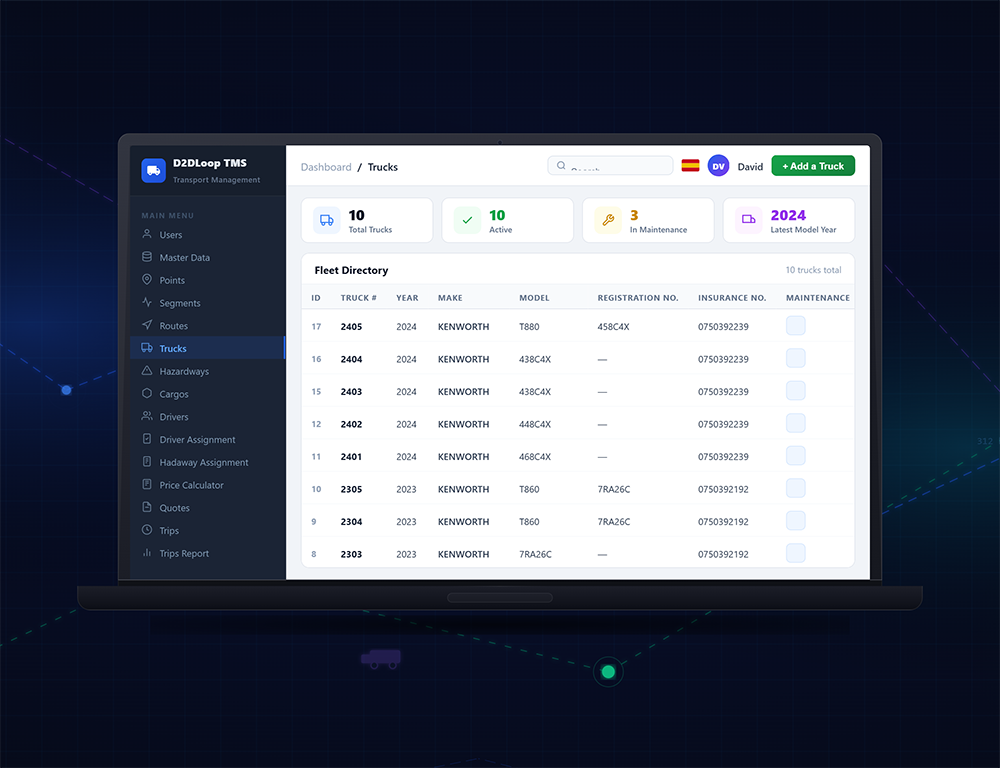
Closeloop designed and implemented a custom-built, cloud-hosted platform named D2DLoop — replacing fragmented tools with a centralized, intelligent system for quoting, routing, execution, and analytics.
Centralized, Configurable System
Unified all quoting, route planning, and trip execution into a single cloud-based environment with role-based access control for planners, dispatchers, and leadership.
Rule-Based Quoting & Cost Engine
Encoded D2D's cost logic (fuel, toll, labor, equipment type) into dynamic templates to produce auditable quotes within minutes — eliminating manual pricing errors.
Route Builder with Segment Metadata
Enabled planners to map routes with stored parameters like incline, tolls, and preferred truck type — eliminating manual plotting and standardizing route decisions.
Trip Tracking & Analytics Dashboards
Converted approved quotes into routable trips, tracking deviations, costs, and delays in real-time — providing leadership with full performance visibility.
AI-Driven Extensions (Phase 2)
Introduced predictive modeling for route optimization, cost forecasting, and generative AI-based reports to surface insights and drive continuous improvement.
Compliance & Inspection Workflows
Automated digital inspections, BEV checks, and audit trail creation with timestamps and geotags — ensuring ongoing alignment with AIAG and OEM regulations.
Modular Cloud Architecture (AWS)
Built on PHP (Laravel), ReactJS, MySQL, and AWS — ensuring scalability, data security, and future API integration with GPS and telematics systems as operations grow.
Tech Stack
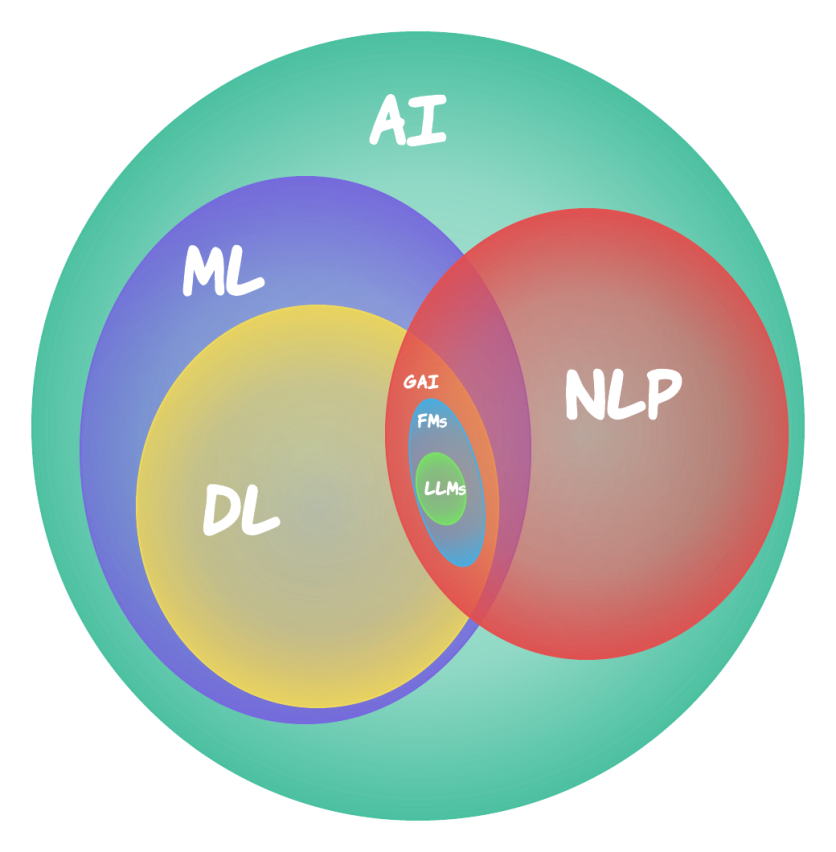
D2DLoop was built on a modern, cloud-native stack designed for scalability, performance, and future AI and telematics extensibility.




Measurable Gains in 3 Months
Within the first 3 months of rollout, D2D Global achieved measurable operational gains across quoting, planning, and customer communication.
Confident, Data-Driven Routing
Planners and dispatchers reported increased confidence using data-driven routes instead of relying on tribal knowledge.
Full Operational Visibility
Leadership gained clear visibility into margins, performance, and bottlenecks across the entire fleet and route network.
Faster Staff Onboarding
Faster onboarding of new staff with standardized, automated workflows replacing informal, tribal processes.
Enhanced Customer Trust
Enhanced customer trust through transparent quoting and reliable delivery updates powered by real-time tracking.
A Blueprint for Logistics Modernization
Purpose-Built Transformation
The D2D Global and Closeloop collaboration illustrates how purpose-built digital modernization can transform traditional haul-away logistics.
Cloud-Based, AI-Ready Platform
By replacing spreadsheets with a configurable, cloud-based, AI-ready platform, D2D achieved faster quoting, stronger compliance, and real-time operational intelligence — positioning itself as a digitally mature and scalable logistics leader in North America.
Modular, Low-Disruption Rollout
Closeloop's modular approach — combining technology, process mapping, and phased rollout — ensured minimal disruption and maximum adoption across teams.
What's Next for D2D
As D2D expands into AI-driven optimization and BEV-specific automation, the platform stands as a blueprint for next-generation logistics modernization — where efficiency, transparency, and resilience are built into the system's core.
- AI-driven route optimization
- BEV-specific automation workflows
- GPS & telematics API integration
- Predictive cost forecasting
Explore the complete journey from problem to results—backed by real data and insights.

Client Value & Feedback
The implementation of Closeloop's digital yard management platform delivered measurable improvements across ACG's operations.
"Closeloop built exactly what we needed — a platform that speaks our language and fits our operations. Quoting that used to take hours now takes minutes, and our dispatchers finally have the visibility to make confident decisions every day."

Daniel Ramírez
Executive at D2D GlobalFrequently Asked Questions
No questions match your search.
A production-grade cloud logistics platform requires a reliable server-side framework for complex business logic (such as Laravel), a responsive frontend for operations and planning workflows (such as ReactJS), a relational database optimized for structured logistics data (such as MySQL), and a cloud hosting environment that provides scalability and reliability (such as AWS). The architecture should be modular to support future integrations with telematics, GPS, AI optimization, and ERP systems without requiring a platform rebuild. Closeloop Technologies used exactly this stack to build D2DLoop — delivering a scalable, maintainable logistics platform that the client could extend as their operational requirements grew.
Transporting finished vehicles — particularly battery electric vehicles — requires inspections that follow OEM-specific protocols: capturing vehicle condition on pick-up and delivery, documenting any damage with geotagged photos, recording VIN-level detail, and maintaining audit-ready records for OEM compliance and insurance purposes. Digital inspection workflows embedded in the logistics platform replace paper-based checklists with structured, timestamped, photo-supported records that are instantly available to all stakeholders. Closeloop Technologies built OEM- and BEV-aligned digital inspection workflows into D2DLoop, giving the client accurate damage records, stronger compliance documentation, and improved transparency with OEM partners.
EDI (Electronic Data Interchange) integration enables automated, structured data exchange between a logistics operator's platform and its customers' systems — eliminating the manual emails, phone calls, and spreadsheet exports that slow down order processing, status updates, and invoicing. When a shipment status updates in the operator's platform, that update flows automatically to the customer's system in a standardized format, reducing communication overhead and error risk on both sides. Closeloop Technologies implemented direct EDI integration as part of the D2DLoop platform, enabling seamless data exchange with customer systems and reducing email dependency by 70% — one of the most significant operational improvements reported by the client.
Without real-time tracking, logistics operators rely on drivers to report status manually — creating delays between when events happen and when management knows about them. This lag makes it impossible to respond to exceptions proactively, track actual costs against planned costs in real time, or give customers accurate ETAs. A platform with real-time trip tracking surfaces cost and performance data as trips happen, enabling operations managers to intervene on exceptions before they become problems. Closeloop Technologies built real-time tracking with cost and performance dashboards directly into D2DLoop, giving the client's team the operational intelligence they previously had no access to.
A smart route builder that stores segment-level metadata — including distance, toll zones, road type, and historical transit times for each leg of a route — gives planners the ability to construct accurate, repeatable trip plans without starting from scratch each time. It also makes cost calculations precise at the segment level rather than relying on rough estimates. This eliminates the guesswork that plagues manual planning and reduces the time planners spend on each job. Closeloop Technologies built this segment-metadata route builder into D2DLoop, directly contributing to a 40% reduction in planning effort — freeing operations staff to handle more volume without increasing headcount.
Manual quoting in vehicle logistics requires estimating fuel consumption, toll costs, labor rates, route distances, and carrier capacity — all of which change frequently. When this is done manually in spreadsheets, even a single outdated variable causes quotes that either undercharge clients (eroding margin) or overcharge them (losing deals). Automated rule-based quoting ties every quote to live operational variables, calculates costs consistently using predefined logic, and eliminates human estimation errors. Closeloop Technologies implemented this automated quoting engine in D2DLoop, delivering a 25% increase in quote accuracy and a 50% reduction in customer quote revisions — two direct indicators of how unreliable the previous manual process had been.
A standard TMS manages scheduling and dispatch within fixed rules. An AI-ready platform is designed with a modular architecture that can accept AI and machine learning enhancements — such as predictive costing, intelligent route optimization, and anomaly detection — without requiring a rebuild. It ingests real-time variables like fuel costs, tolls, and labor rates into its rules engine, and its data model is structured to feed AI optimization layers as the business scales. Closeloop Technologies built D2DLoop as an AI-ready platform from the ground up using Laravel, ReactJS, MySQL, and AWS — ensuring the client could realize immediate operational gains while positioning the platform for future AI-driven optimization without architectural rework.
A vehicle logistics operator managing car carriers across multiple states faces compounding problems when running on spreadsheets and email version mismatches between quoting files, slow planning cycles that delay customer responses, outdated cost models that cause 3–5% margin leakage on every job, and no real-time visibility into trip status or profitability. Planning depends entirely on tribal knowledge rather than data, making it impossible to scale consistently. Closeloop Technologies identified all of these pain points for a North American haul-away logistics operator and replaced the entire Excel-and-email workflow with D2DLoop, a centralized cloud-based logistics platform that eliminated these inefficiencies within three months of deployment.